

The best therapy dogs share three things: a calm, people-first temperament, steady nerves in busy spaces, and a genuine love of strangers. Golden Retrievers, Labradors, Poodles, and Cavaliers top most shortlists, and mixed breeds pass evaluations every year because assessors test the dog in front of them, not the pedigree. Those social skills are built early, and a structured daycare programme is a practical setting to develop them.
Key Takeaways
- Temperament beats breed. A relaxed, people-loving mixed breed will outwork an anxious purebred every time.
- Golden Retrievers, Labradors, Poodles and Cavalier King Charles Spaniels are the most consistent choices.
- Therapy dogs visit many people by invitation. Service dogs work for one handler and have legal access rights.
- Most organisations evaluate dogs at 12 months or older, once obedience holds up in distracting places.
- Early, positive group socialisation is the best preparation you can give a future therapy dog.
What the Best Therapy Dogs Have in Common
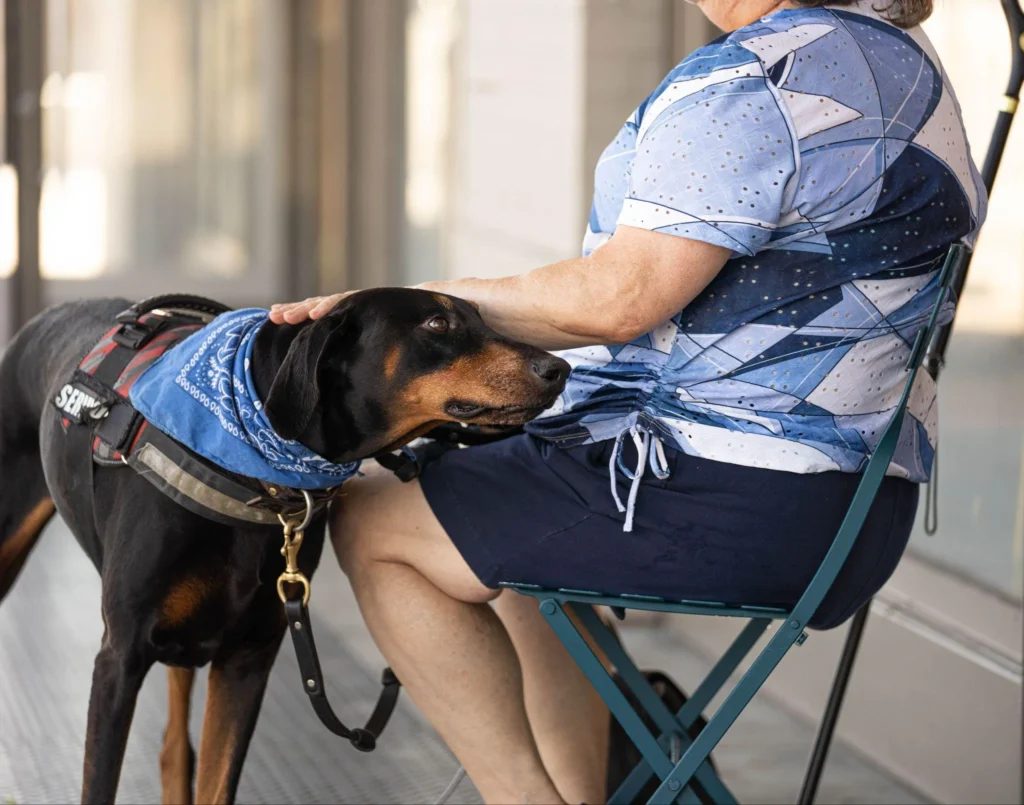
Breed reputation opens the conversation, but evaluators score the dog standing in front of them on a short list of behaviours.
- Calm and friendly around strangers, odd noises, wheelchairs and medical equipment
- A real social drive, meaning the dog seeks out attention rather than simply putting up with it
- Reliable obedience, including holding a sit or a settle in a noisy room
- Adaptability, from a quiet memory care unit to a packed school gym
- A low startle response around sudden movement and unfamiliar smells
- The health and stamina to finish a visit relaxed instead of worn out
A dog that ticks those boxes can come from anywhere. The temperament matters far more than the papers.
Best Breed for Therapy Dog?

We hear this one constantly, usually from active owners who want a dog that can comfort strangers on a Tuesday and still hike on Saturday.
Start With the Steady Four
Golden Retrievers, Labradors, Poodles and Collies have been bred for generations to work alongside people and stay calm around them. That is why they top almost every shortlist. Lines still vary, though. Some show lines run timid, so ask the breeder to introduce you to the parents and look for confident, friendly dogs.
Match the Dog to Your Life, Not Just the Job
Therapy visits take a few hours a week. The rest of the time, that dog lives your life, so weigh energy and exercise needs the same way you would when choosing a breed for an active lifestyle. Career-change dogs are another good route, since a dog who trained for service work and did not finish arrives well socialised and steady.
Let Temperament Make the Final Call
A good breeder picks the puppy for you rather than the other way around, and meeting the parents tells you plenty about the dog you are bringing home.
Therapy Dogs, Service Dogs and Emotional Support Animals
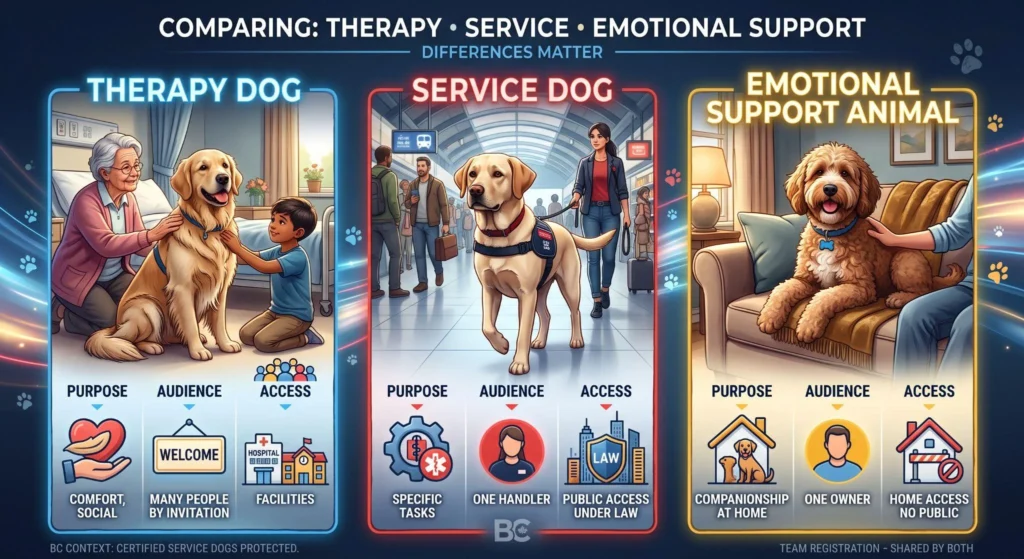
These three get mixed up all the time, and the differences matter before you commit to a path.
| Type | Trained for | Who they help | Where they can go |
| Therapy dog | Comfort and social visits | Many people, by invitation | Facilities that welcome them |
| Service dog | Specific disability tasks | One handler | Public access under the law |
| Emotional support animal | Companionship at home | One owner | No general public access |
In British Columbia, certified service dogs are protected under provincial law. Therapy dog teams visit hospitals, schools, and care homes only where they are invited, usually through organizations like St. John Ambulance or Pet Partners that test and register each handler and dog together.
Certification belongs to the team, too. Evaluators score you and your dog as a pair, so the registration is shared rather than attached to the dog alone.
Top Therapy Dog Breeds and Where They Shine

Match the breed to the setting and the work gets easier for everyone, including the dog.
| Breed | Best setting | Why it works |
| Golden Retriever | Hospitals and care homes | Patient, gentle and rarely startled |
| Labrador Retriever | Schools and reading programmes | Playful with kids yet easy to settle |
| Poodle | Allergy-sensitive facilities | Low-shedding coat and a fast learner |
| Cavalier King Charles Spaniel | Memory care and bedside visits | Lap-sized, quiet and emotionally tuned in |
| Bernese Mountain Dog | Children’s programmes and comfort settings | Big, unhurried and reassuring |
| Mixed breed | Almost anywhere | Evaluated on temperament, not papers |
Two practical notes before you fall for a coat. Hospitals often restrict heavy shedders, which is why Poodles keep showing up on facility rosters. And Cavaliers carry a high rate of mitral valve disease, so plan on cardiac screening before visits begin and once a year after that.
How Structured Daycare Builds a Future Therapy Dog

Confidence around strangers is not something you can cram for the week before an evaluation. It gets built in layers.
Puppyhood, 8 to 16 weeks
This is the prime socialisation window. Introduce new people, surfaces, sounds and equipment gently, and pair each one with something good. A frightening experience now can echo for years, so keep every introduction low-pressure.
Adolescence and Group Play
Structured group time teaches a young dog to stay relaxed around unfamiliar dogs and people, which is exactly what regular daycare does for a dog’s confidence. At DogPlay, groups are sorted by size, temperament, and energy. Handlers are kept to a minimum ratio of one per 15 dogs, and only one new dog joins per day, so every introduction gets full attention.
The Year Mark and Beyond
Most certifying organisations evaluate dogs at 12 months or older. Keep everything reward-based along the way, because punishment-style training erodes the trust and enthusiasm therapy work runs on.
Health Checks Every Therapy Dog Needs First

Facilities and certifying organisations expect a healthy dog, and your vet is the first stop.
- Core vaccines kept current, along with flea, tick and parasite prevention
- An annual wellness exam with written clearance from your veterinarian
- Orthopaedic screening for large breeds, since hip dysplasia in medium and large dogs can cut a working career short if it goes unmanaged
- Cardiac screening for Cavaliers, repeated yearly
- A dental check, because many facilities ask about oral hygiene
Watch for Signs Your Dog Needs a Break
Repeated yawning or lip licking during visits, hesitating at the facility door, or pulling away from contact are all requests for rest. Keep visits to an hour or two, a couple of times a week, and give your dog genuine off-duty days in between. If the enthusiasm fades week after week, treat that as real information and scale the visits back.
What Dog Parents Say About DogPlay
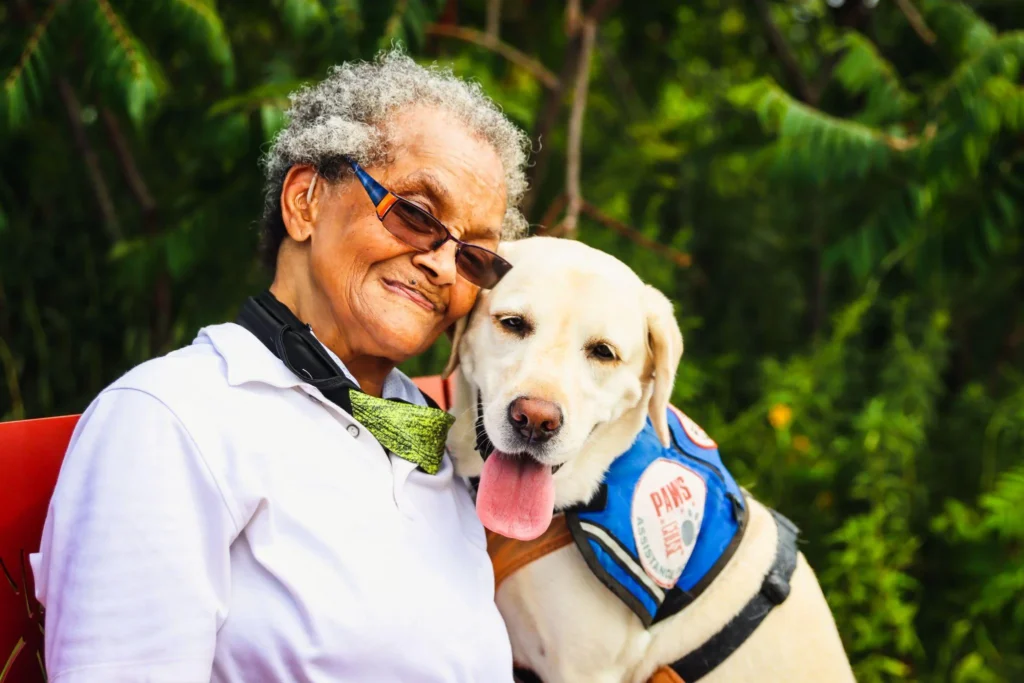
The confidence-building side of therapy dog prep is what we watch happen every week, and the families here describe it best.
Steve and Åsa watched their girl Pip go “from being very hesitant about daycare” to leading the way through the doors within a couple of weeks, tail wagging as she heads in.
Blake and Karlee brought Boomer, a rescued Husky who had struggled at two other daycares before this one, and say that here “he received all the attention that he deserves.” JoAnne credits Lucky’s regular visits with changing “the way he interacts with dogs on walks.”
That progress comes from a team of PackPro Certified Handlers running small, well-matched groups all day. And when a facility wants a freshly groomed visitor, the award-winning grooming salon is under the same roof.
Raise a Dog Everyone in Your Life Is Happy to See

Whichever way you go, Golden, Cavalier or one-of-a-kind mixed breed, the path is the same. Pick for temperament, protect the dog’s health, and stack up calm, positive practice around new people and new dogs. That practice can start this week.
DogPlay has been shaping social, confident dogs at our dog daycare in Vancouver since 2014, and every newcomer begins with a trial daycare day. Create an account at dogplay.ca and book your dog’s trial today.
FAQs About Best Therapy Dogs
Quick answers to the questions we most often hear from owners considering this path.
Which breed is chosen most often for therapy work?
Golden Retrievers and Labradors lead the way thanks to steady temperaments and strong social drive. Poodles are the usual pick for allergy-sensitive facilities.
How old does my dog need to be?
Most certifying organisations evaluate dogs at 12 months or older, once obedience holds up in busy, distracting environments.
Can a rescue or mixed breed qualify?
Yes. Evaluators assess each dog’s temperament and skills, so a calm, social rescue is a genuine contender.
FAQs About DogPlay
A few practical details about how things work here.
Does DogPlay train therapy dogs?
No. DogPlay is a daycare, boarding and grooming facility, and the structured socialisation dogs build here is the same foundation certification programmes look for.
How do I get started?
Create an account at dogplay.ca and book the mandatory trial daycare day. Only one new dog is accepted per day, so every newcomer gets a proper, unhurried introduction.
Where is DogPlay and when is it open?
You will find us at 8849 Selkirk Street in Marpole, South Vancouver, about seven minutes from YVR, open 365 days a year, holidays included.