

So, what are the best pet-friendly travel tips? They start long before you load the car: a vet check and updated paperwork, proper restraint on the road, pet policies confirmed by phone, and an honest look at whether your dog enjoys travel at all. Some dogs love every minute of a trip. Others are far happier settling into dog boarding in Vancouver while you explore.
This guide covers both paths, including the busy holiday season, so you can make the call that actually suits your dog.
What Are the Best Pet-Friendly Travel Tips?
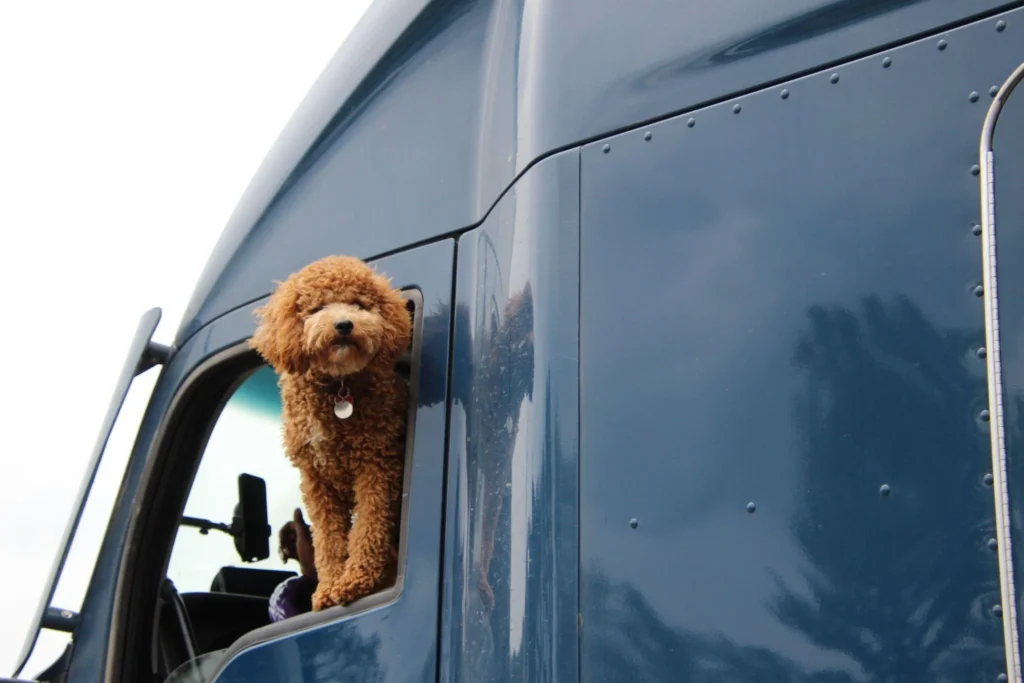
Good preparation is where a pet-friendly vacation is won or lost, and plenty of people are planning one: 53% of tourists take vacations with their pets, so airlines, hotels, and border agents all have firm expectations about the paperwork and gear you and your dog show up with.
Start With the Vet, Not the Suitcase
Book a checkup two to four weeks before departure, especially if you are crossing provincial or international borders. Many destinations require a health certificate issued within 10 days of travel plus proof of current vaccinations, and some countries add a rabies titre test or import permits that take months to arrange, so read your destination’s entry rules early.
While you are at it, confirm your dog’s microchip registration lists your current phone number, and add a temporary travel tag to their collar with the address and number of the place you are staying. A lost dog in an unfamiliar city gets home much faster with two forms of current ID.
What to Pack for Your Dog
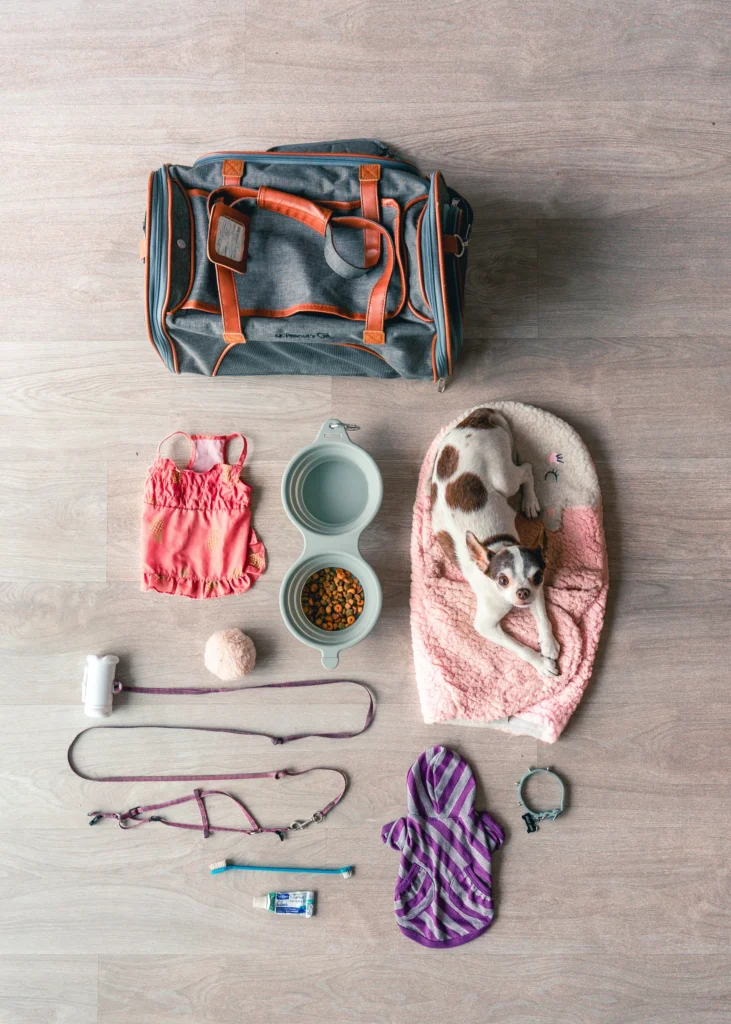
A well-packed kit prevents most mid-trip scrambles. At a minimum, bring:
- Enough of their regular food for the whole trip, plus a small buffer
- Any medications, with a copy of the prescription
- A collapsible water bowl and fresh water for the road
- A familiar blanket or toy that smells like home
- Leash, harness, waste bags, a towel for wet paws, and a basic dog first aid kit
Practise Before the Real Trip
Short practice drives in the weeks before departure teach your dog that the car or carrier is nothing to fear. Keep sessions brief, reward calm behaviour, and build up the duration gradually. A dog who has rehearsed the boring version of travel handles the real thing with far less stress, and you will spot problems like motion sickness while there is still time to work on them.
Getting There Safely: Car Rides and Flights With Your Dog
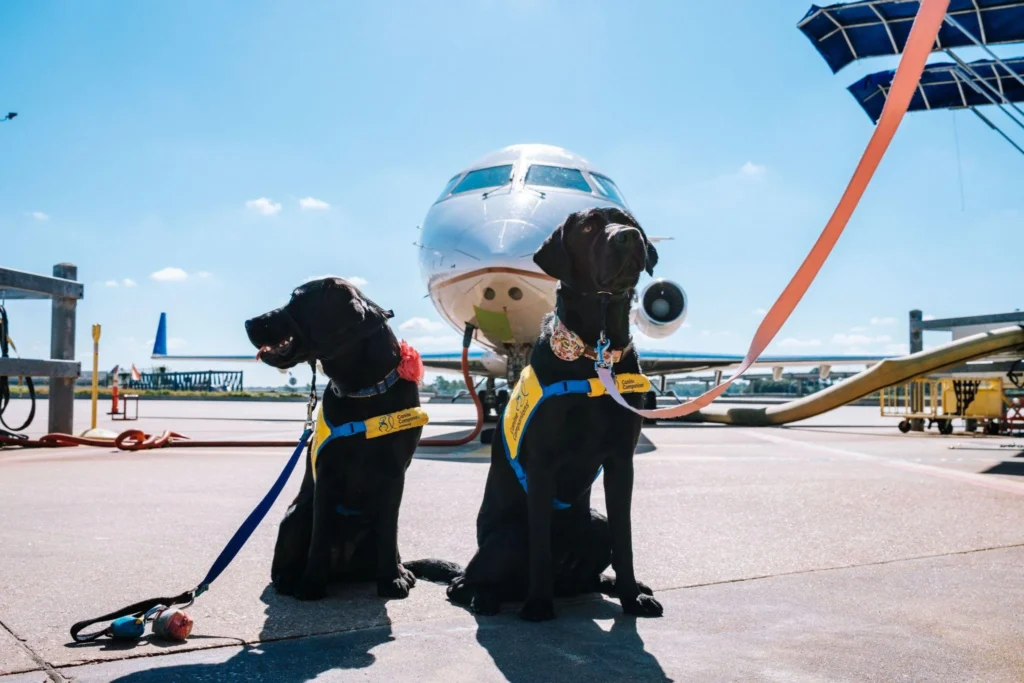
Travelling with dogs by road or air comes down to the same rule: plan the safety systems in advance rather than improvising them on departure day.
Keeping Your Dog Safe in the Car
Most practical tips for travelling with dogs involve the car, because that is how the majority of trips happen. The single biggest risk is an unrestrained dog: in a sudden stop, even a medium-sized dog becomes a projectile with real force. Use a crash-tested harness clipped into the seatbelt system or a crate secured in the cargo area of an SUV or van.
Keep your dog in the back seat away from airbags, and roll the windows up enough so they can’t stick their heads out and catch flying road debris. Never leave your dog alone in a parked vehicle! Make sure the air conditioning is flowing, and snap a GPS tracker on their collar just in case they manage to slip away.
How Often to Stop on a Road Trip
Plan a break every 2 to 3 hours so your dog can stretch, drink, and relieve themselves. Choose rest stops with grassy areas away from traffic, keep the leash on in unfamiliar places, and offer water at every stop. Watch for drooling, whining, or restlessness, which are early signs of motion sickness, and dial back food a few hours before long driving stretches.
Flying With Your Dog
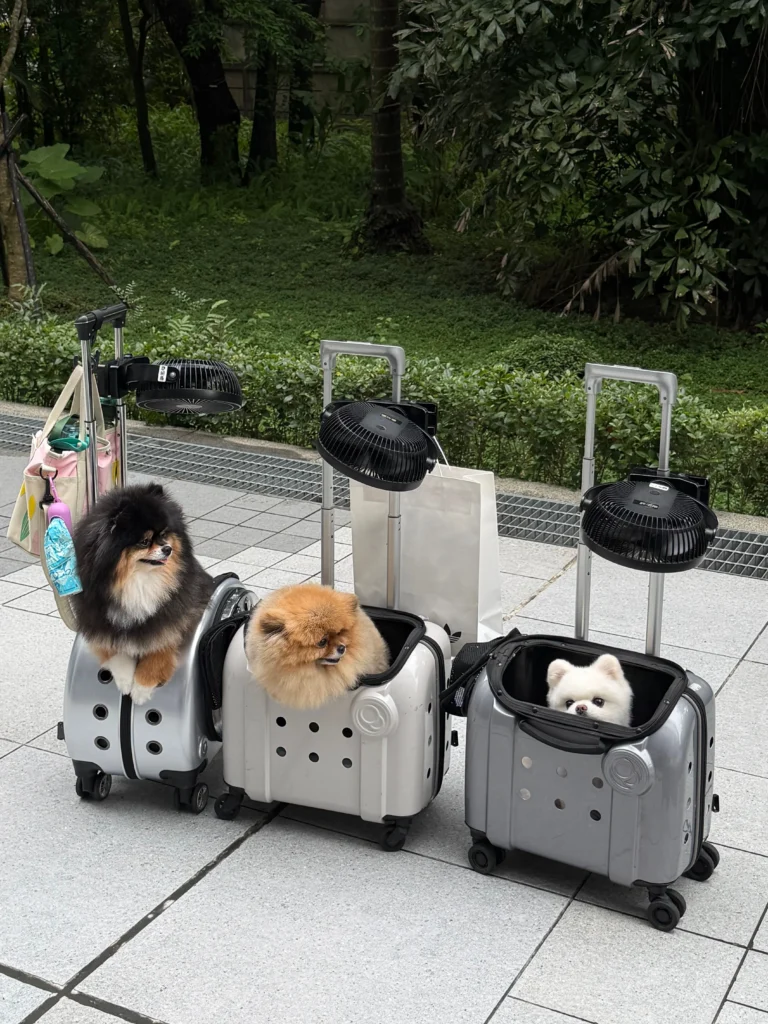
Flying with a dog takes more lead time than most owners expect. Policies differ between airlines, most flights cap the number of pets on board, and carrier size rules are strict, so book early and confirm your reservation directly with the airline.
| Option | Best For | Watch Out For |
| In-cabin | Small dogs in airline-approved carriers | Carrier must fit under the seat and allow standing and turning |
| Cargo | Larger dogs when no other option exists | Higher risk; many airlines ban flat-faced breeds like pugs and bulldogs |
Veterinarians generally advise against sedating dogs for flights because sedation affects balance and heart function at altitude. Build carrier comfort in the weeks beforehand instead, and be honest about whether your dog is a good candidate for air travel at all. Some dogs find it genuinely distressing, and a different arrangement serves them better.
The Ultimate Guide to Travelling With Your Dog During the Holidays
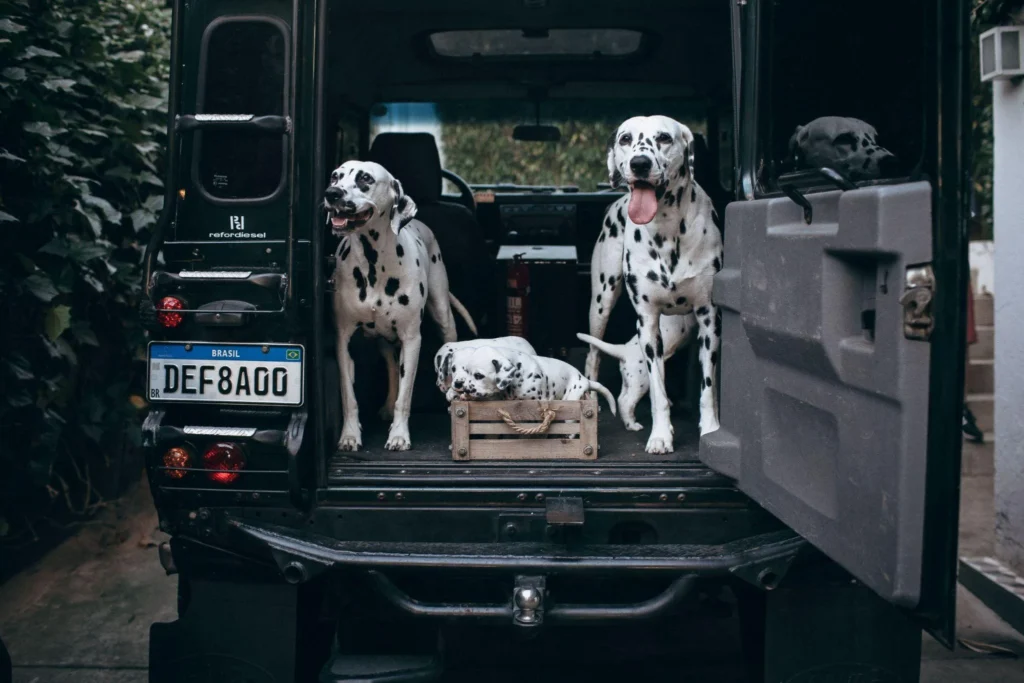
Holiday trips deserve their own plan. Flights fill up, boarding facilities book out, and family gatherings are full of hazards your dog never meets the rest of the year.
Should Your Dog Come Along This Year?
Be honest about the trip itself, not just your wish to bring them. A dog who rides calmly, settles quickly in new places, and is genuinely welcome at your destination will probably love the holidays with you. A dog facing a packed car, icy highways, a house full of strangers, and nowhere quiet to decompress may have a rough week. Choose based on your dog’s temperament, not the calendar.
Winter driving adds another layer, so check road conditions before committing and pack for cold-weather stops.
If Your Dog Travels With You
Confirm your accommodation’s pet policy in writing before the trip, because holiday season is the worst possible time to discover a surprise weight limit at check-in. Pack their regular food and stick to normal meal and walk times as closely as you can, since routine is what steadies dogs in chaotic settings.
At your destination, set up a quiet room away from the party where your dog can retreat. Keep chocolate, cooked bones, alcohol, and rich table scraps well out of reach, and brief your hosts on the rules before your dog needs rescuing rather than after.
If Your Dog Stays: Book Boarding Early
Holiday demand for overnight boarding is intense, and at DogPlay there is a structural reason to plan ahead: every new dog completes a trial daycare day first, and we accept only one new dog per day so each gets a proper individual assessment. If a December trip would be your dog’s first stay with us, start the process weeks in advance.
Once your dog is approved, scheduling is a breeze. The facility is open 365 days a year, including statutory holidays from 9:00 AM to 5:00 PM with a $10 surcharge. A trained handler sleeps right next to the suites, and all meals and medications are tracked in their system. Plus, if your dog stays for over 10 nights, they get a free bath and brush before pickup. Try to prepare your dog for a boarding stay ahead of time so drop-off day is totally stress-free.
Is Your Dog Actually Ready to Travel?
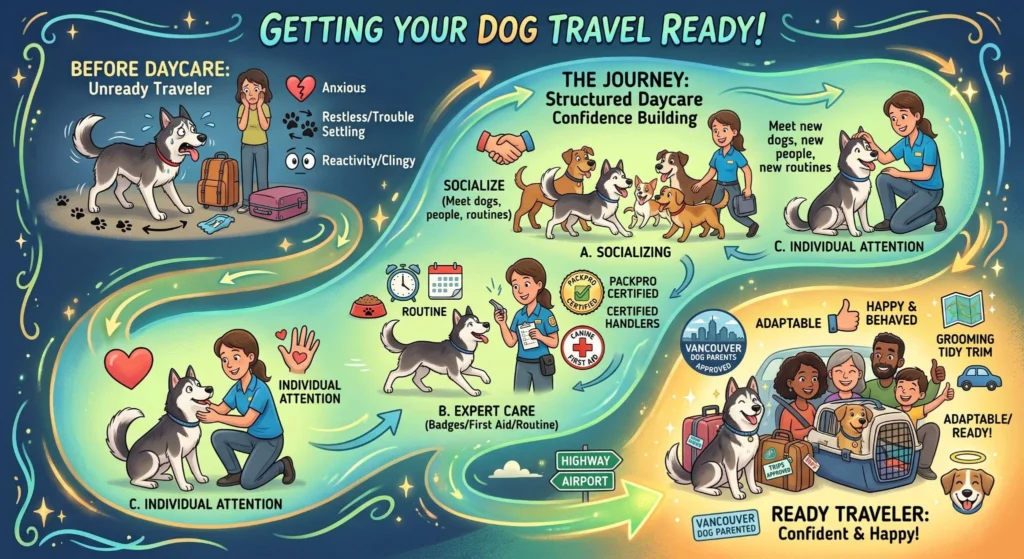
Plenty of travel problems are really temperament problems in disguise. The encouraging part: adaptability can be built.
Signs Your Dog Needs More Practice First
Excessive panting or pacing in new environments, trouble settling anywhere unfamiliar, reactivity toward strange dogs or people, and constant clinginess are all signals that a big trip may be too much right now. None of these are permanent. They simply mean your dog needs more positive exposure to new situations before the airport or the eight-hour drive.
How Structured Daycare Builds Travel Confidence
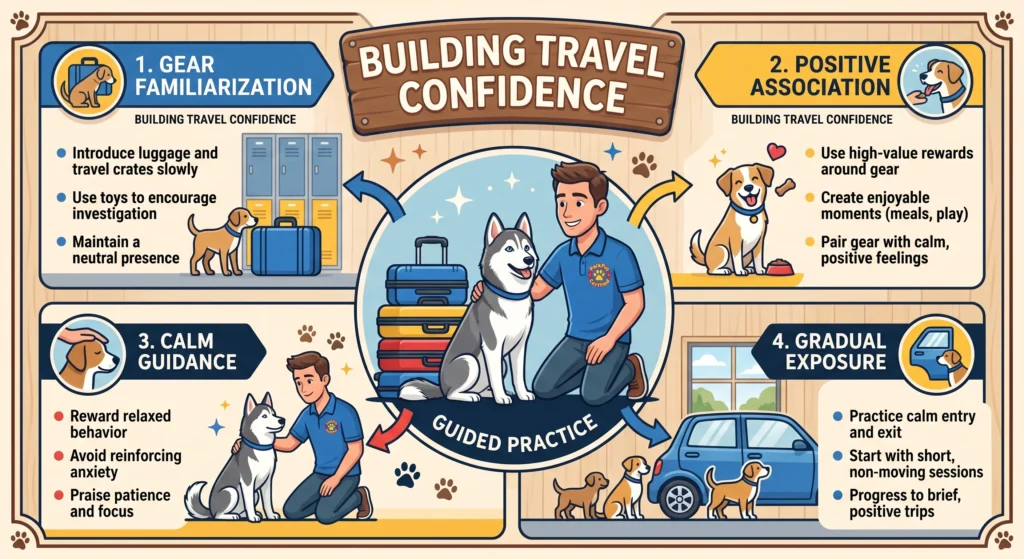
Dogs who regularly meet new dogs, new people, and new routines in structured dog daycare develop exactly the adaptability that travel demands. Boomer, a rescued Husky, came to us after two other daycares did not work out. He was bored in unstructured settings and jumping from pen to pen looking for something to do.
With individual attention and a consistent routine, Boomer settled in and socialised well with the group. His family wrote that “he received all the attention that he deserves.”
What makes that possible on our floor:
- Every handler is a PackPro Certified Handler with Canine First Aid training
- Confidence-building happens safely and by design, not by chance
What Vancouver Dog Parents Say
Debbie Pincombe saw the shift in her dog Dusty, within days, calling him “a happier and better-behaved dog” after he started regular visits. You can read what other local owners say about our dog daycare in Vancouver before you book anything.
The same low-stress approach runs through our award-winning grooming salon, which is handy for a deshed before a long car ride or a tidy trim before the holiday photos.
Give Your Dog a Great Trip, Even If They Stay Home
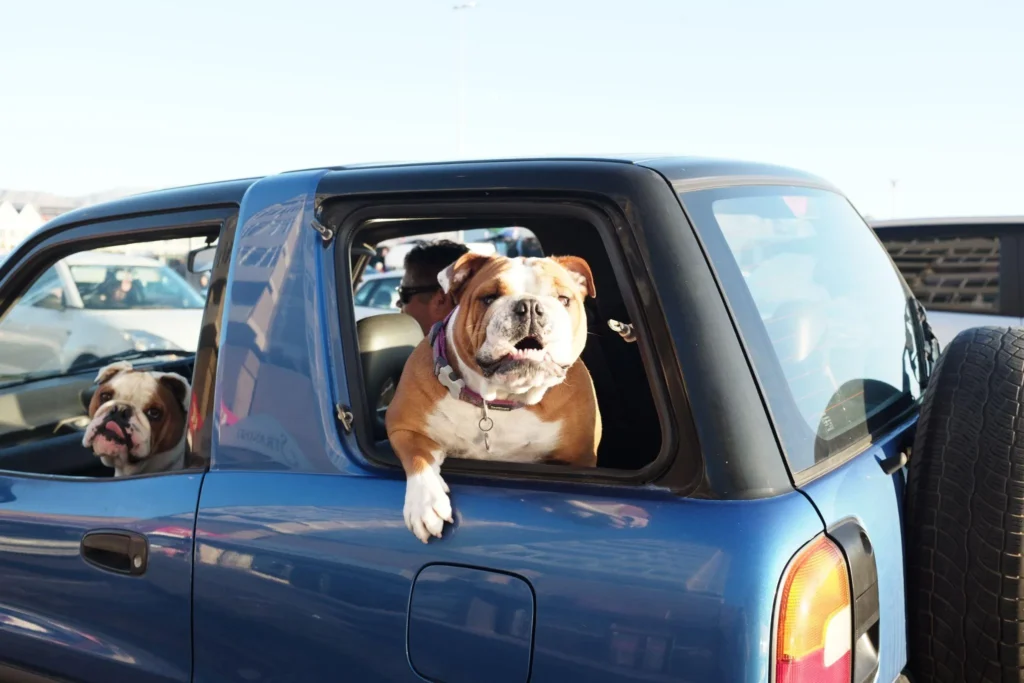
The best trips with dogs are planned around the dog, and so are the best trips without them. Sort the vet visit and paperwork early, secure the car properly, and be honest about whether this particular adventure is one your dog would actually enjoy.
If the answer is not yet, that is not a failure. It is a chance to give them their own holiday while you take yours. Create your account at dogplay.ca and book a trial daycare day, so your dog has a place they love whether they are coming along or waving you off from the window.
FAQs About Pet-Friendly Travel Tips
How early should I start preparing my dog for a trip?
Two to four weeks is a comfortable window for the vet visit, paperwork, and practice drives. International trips can require months for titre tests or import permits.
Should I sedate my dog for a flight?
Veterinarians generally advise against it because sedation affects balance and heart function at altitude. Carrier training in the weeks before the flight is the safer route.
How often should we stop on a road trip with a dog?
Every 2 to 3 hours for water, a stretch, and a bathroom break. Keep your dog leashed at every stop, especially in unfamiliar areas.
How do I know if a hotel will genuinely welcome my dog?
Call ahead and ask about weight limits, fees, and which areas of the property allow dogs, then get the answers in writing. Listings are not always current.
FAQs About DogPlay
Where is DogPlay located?
DogPlay is at 8849 Selkirk Street in Marpole, South Vancouver, about 7 minutes from YVR and only 5 minutes from Richmond.
Is DogPlay open during the holidays?
Yes, DogPlay is open 365 days a year. Stat holiday hours are 9:00 AM to 5:00 PM with a $10 surcharge.
Does someone stay overnight with the boarding dogs?
Yes. A trained overnight handler sleeps on-site in a bedroom connected directly to the boarding suites, so dogs are never left alone.
What does my dog need before their first boarding stay?
Every new dog completes a trial daycare day first, and only one new dog is accepted per day, so book well ahead of busy seasons.