
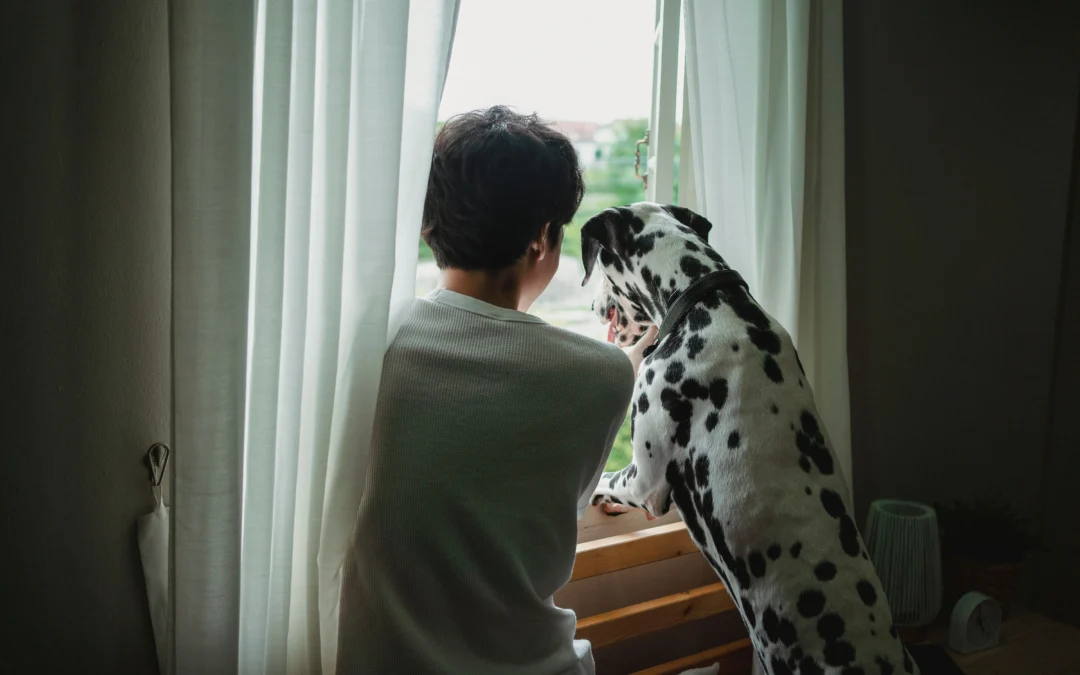
If your dog turns into a different animal the moment a crate door clicks shut, you are dealing with dog kennel anxiety. It shows up during regular crate time at home and just as easily during an overnight boarding stay, and figuring out why it happens is the first step toward helping your dog relax. Some dogs panic because they hate being away from you.
Others are completely fine with you leaving but cannot stand the enclosed space itself. A smaller group simply never learned that a crate is a safe place to begin with. Those three causes look almost identical from the outside, which is exactly why so many well-meaning fixes miss the mark. Once you know which one you are actually dealing with, everything gets easier.
Dog Kennel Anxiety Is Not Always the Same Problem
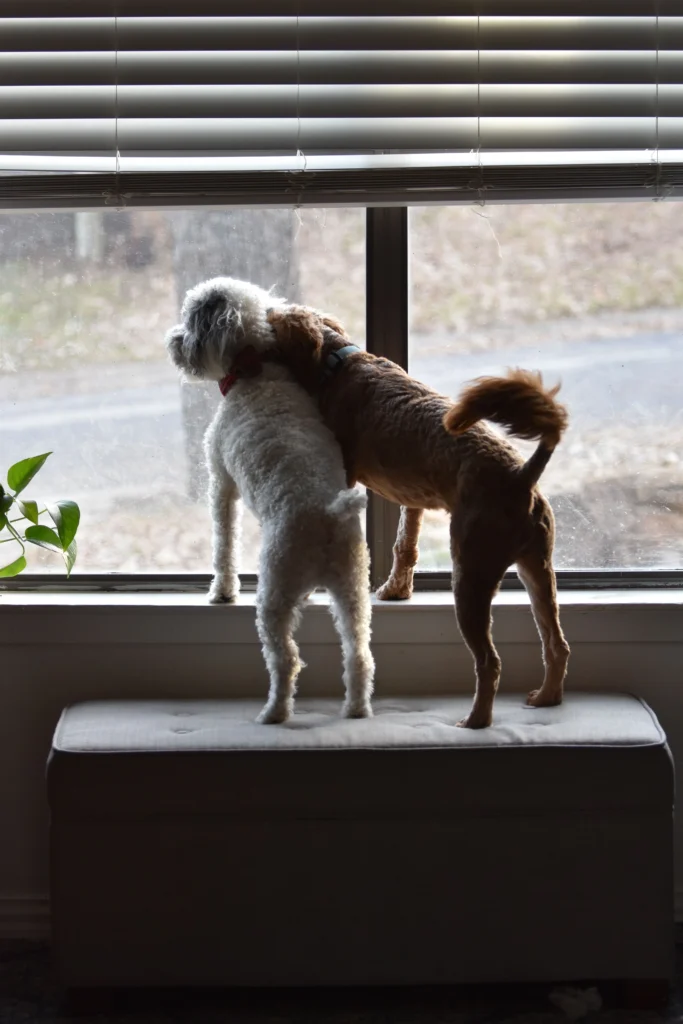
Kennel anxiety is not one single problem. It is an umbrella term for three different reactions that all show up around a crate, and mixing them up is the main reason home fixes do not work.
The Three Root Causes
Separation anxiety is about your absence, not the crate. A dog with true separation anxiety paces, whines, or acts out in an open room just as much as in a crate, because being apart from you is the actual trigger.
Confinement anxiety is the reverse. Your dog is genuinely fine with you leaving the house but panics the moment an enclosed space closes around them. Give them the run of the house and they settle right down, which tells you the crate itself, not your absence, is the real issue.
Incomplete crate training is the most common cause by far, and the easiest one to fix. The dog was never properly introduced to the crate, or the crate got linked to something unpleasant along the way, so it reads as a trap instead of a den. The fix almost always comes down to slowing everything down and rebuilding that association from scratch.
How Can I Live Life with a Dog with Separation Anxiety that HATES her Crate?
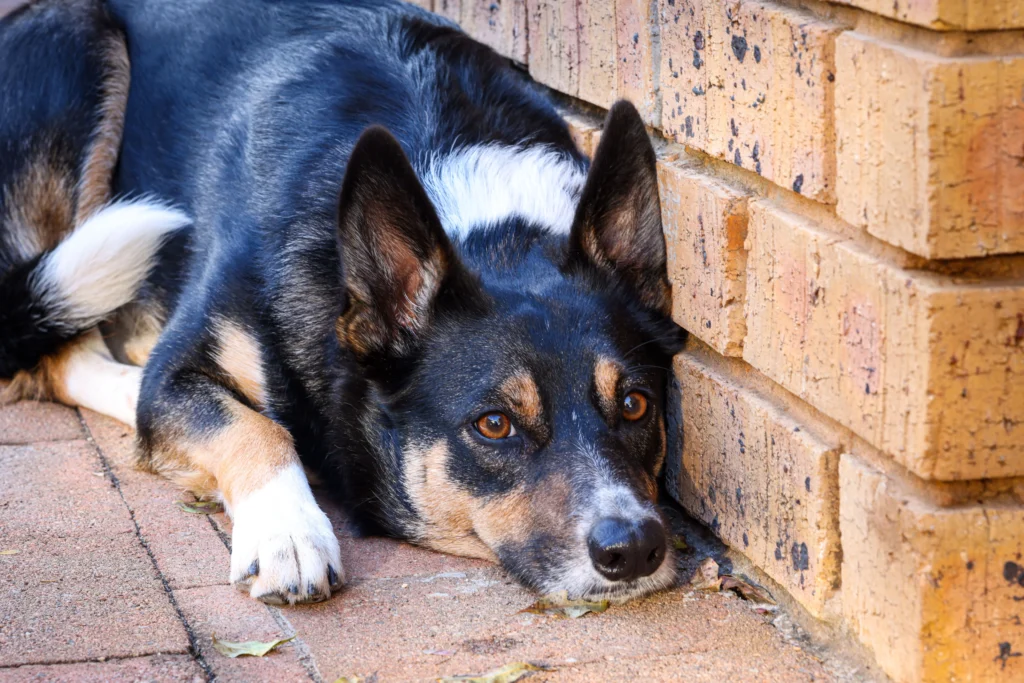
A dog can do fine in the crate for months and then, seemingly out of nowhere, start dreading it. She shakes at the sound of your keys, refuses the crate cue, and needs to be lifted in instead of walking in herself. Nothing about the crate changed. What changed is what it has come to predict.
Why a Fine Crate Can Suddenly Feel Threatening
Dog anxiety in kennel settings usually comes down to what the dog has learned the crate means, not the box itself. If crate time and your departure keep happening back to back, the crate becomes the warning sign, the same way keys or shoes already are for a lot of dogs. That is different from kennel anxiety in dogs that never liked the crate at all. Here, it used to be neutral or welcoming, and the pairing with your absence is what turned it into a trigger. One quick check: a dog who eats meals in the crate but ignores treats or puzzles is usually stressed, not bored. Anxious dogs tend to skip anything that requires curiosity.
Rebuilding Trust in the Crate
How to kennel train a dog with separation anxiety who has started resisting it comes down to breaking the link between the crate and you leaving, not repeating the same routine harder.
- Practice crate time on days you are going nowhere, treats in and out, door open, no pressure
- Never lift or place her in the crate. If she will not walk in herself, the pace is too fast
- Feed meals and chews in the crate during ordinary at-home time, not just before you leave
- A gated room or exercise pen can do the same job while you rebuild trust from scratch
Kenneling a dog with separation anxiety is slower than kenneling one with plain confinement anxiety, since the crate is not the enemy here; your absence is. Skip any correction for crying in the crate. It teaches her the crate is also where she gets in trouble, undoing the trust you are trying to rebuild.
Shopping for an anxiety kennel for dogs? The better kennels for dogs with anxiety tend to be snug and den-like rather than oversized, with solid sides and a cover to block visual stimulation. It will not replace the behavioural work above, but it helps.
If a few weeks of gentle, consistent practice does not move things, a certified separation anxiety trainer or veterinary behaviourist is worth it, especially for rescue dogs carrying associations from before you knew them. A trial doggy daycare day already on the calendar takes some pressure off the crate to be the only thing holding her together, and preparing your dog for a boarding stay follows the same gradual logic when an unfamiliar crate away from home is part of it.
Ready to Help Your Dog Feel at Ease?
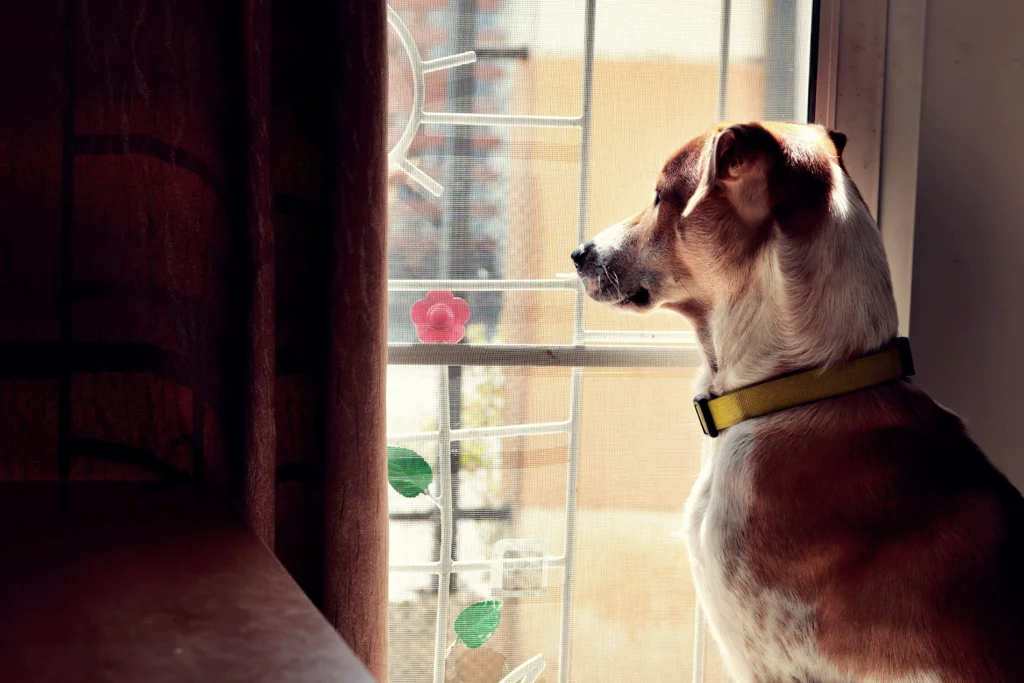
Kennel anxiety is genuinely manageable once you know which type you are dealing with. Watch for the signs, match your approach to the real cause, and lean on your veterinarian for anything severe. If a boarding stay is part of the picture, choosing a facility that treats your dog as an individual instead of a number makes a real difference. Book your doggy daycare tour today and see how much calmer your dog’s next stay can be.
FAQs About Kennel Dog Anxiety
What is the difference between separation anxiety and kennel anxiety?
Separation anxiety comes from your absence, whether or not a crate is involved. Kennel or confinement anxiety comes from the enclosed space itself, even with you right there. The ASPCA notes that crate confinement usually is not the right fix for true separation anxiety.
Can kennel anxiety be resolved?
In most cases, yes. Confinement anxiety and incomplete crate training respond well to patience and gradual exposure, while true separation anxiety takes longer and may need professional support.
FAQs About DogPlay
Can dogs with kennel or separation anxiety still be boarded at DogPlay?
Yes. Dogs are never left alone, since a trained PackPro Certified Handler sleeps on-site connected to the boarding suites every night, and our DogPlay Tuck-In bedtime routine pairs a calming treat with a gentle brush-out to help nervous dogs settle. We have been a dog daycare in Vancouver trusted with anxious dogs since 2014.
Does DogPlay help ease dogs into their first boarding stay?
Yes. Every new dog completes a trial daycare day before any boarding stay, so they already know our team and the space, which makes dog boarding in Vancouver, BC feel familiar instead of frightening when the real stay arrives.