
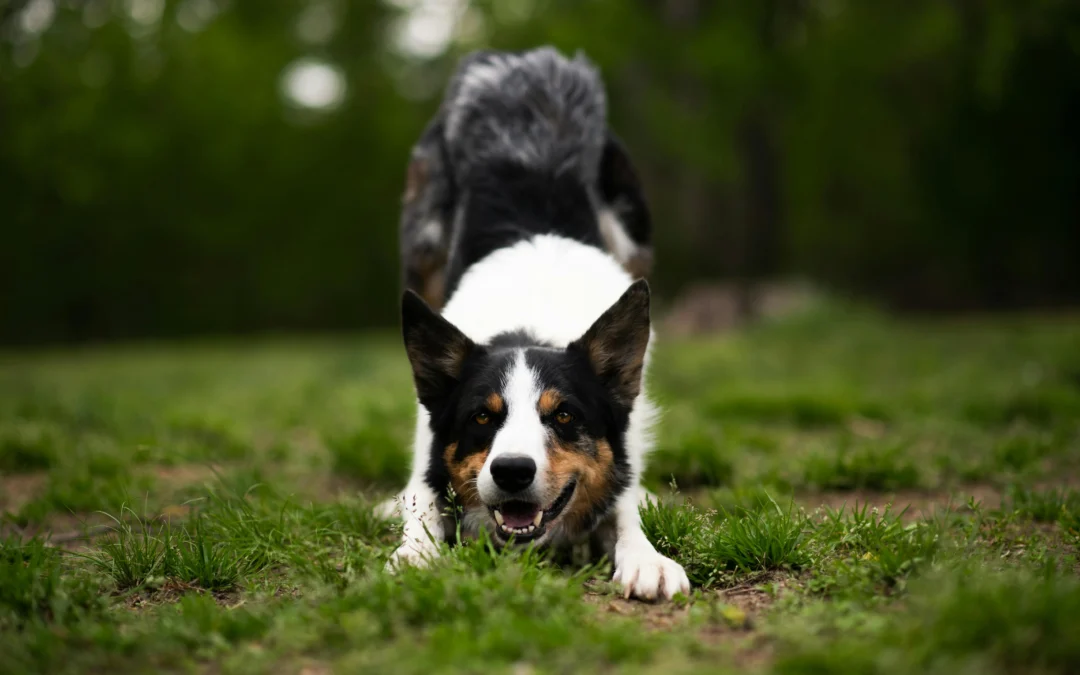
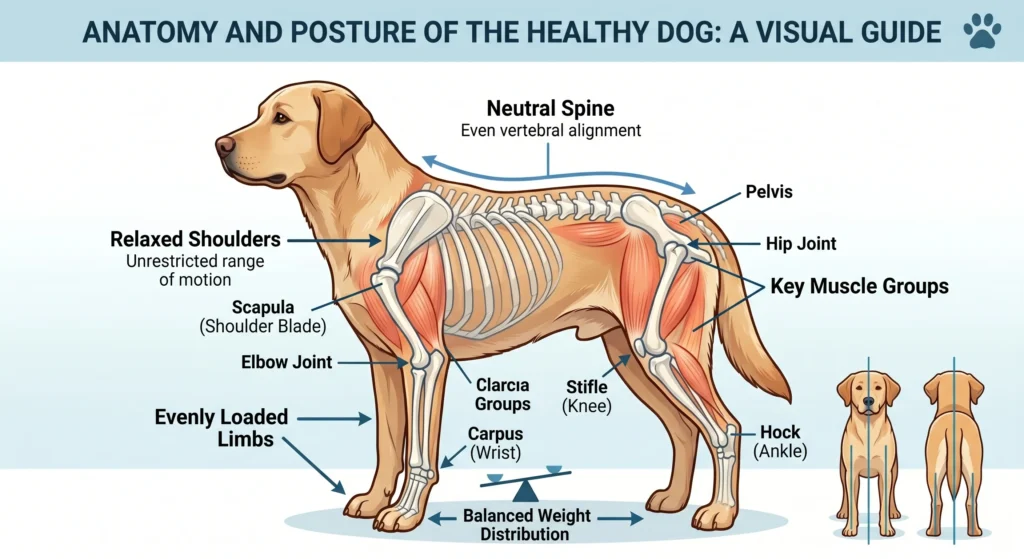
Good dog posture means a neutral spine, weight distributed evenly across all four limbs, relaxed shoulders, and naturally aligned joints. When that balance shifts, it is worth paying attention. A dog’s posture tells you a great deal about how they feel, how they move, and whether something might be quietly going wrong beneath the surface.
This guide walks you through what healthy posture looks like, how to spot problems early, and what you can do to help your dog move and feel their best. Whether your dog is just getting started or heading into their senior years, dogs enrolled in structured daily care and supervised play tend to develop stronger movement habits over time.
Key Takeaways
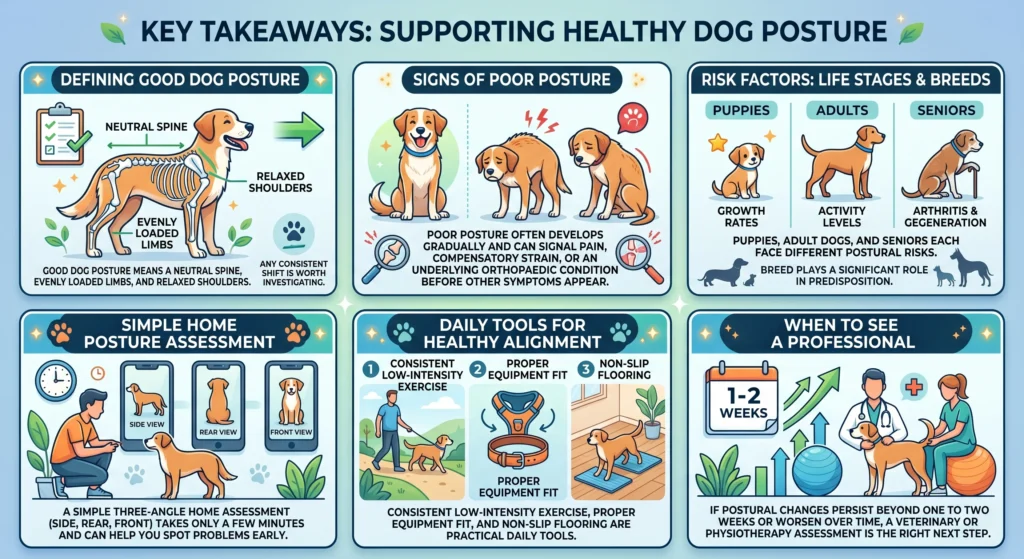
- Good dog posture means a neutral spine, evenly loaded limbs, and relaxed shoulders. Any consistent shift from that baseline is worth investigating.
- Poor posture often develops gradually and can signal pain, compensatory strain, or an underlying orthopaedic condition before other symptoms appear.
- Puppies, adult dogs, and seniors each face different postural risks, and breed plays a significant role in predisposition.
- A simple three-angle home assessment (side, rear, front) takes only a few minutes and can help you spot problems early.
- Consistent low-intensity exercise, proper equipment fit, and non-slip flooring are the most practical daily tools for supporting healthy alignment.
- If postural changes persist beyond one to two weeks or worsen over time, a veterinary or physiotherapy assessment is the right next step.
What Is Good Posture for Dogs?
Good posture in a dog means the spine runs in a relatively neutral line from the base of the skull to the tail, weight is distributed evenly across all four limbs, the shoulders sit relaxed without tension, and the joints align naturally without twisting or collapsing inward. Think of it like a sturdy table: all four legs need to carry an even load for the structure to stay sound. When one leg wobbles, the whole table compensates, and the same is true for your dog’s joints.
Standing posture should look balanced and square, and good posture in a sit means both hind feet are tucked neatly under the hips. Normal varies by breed, so getting familiar with your own dog’s healthy baseline is the first step to noticing when something changes.
Signs of Poor Posture in Dogs: A Simple Home Checklist
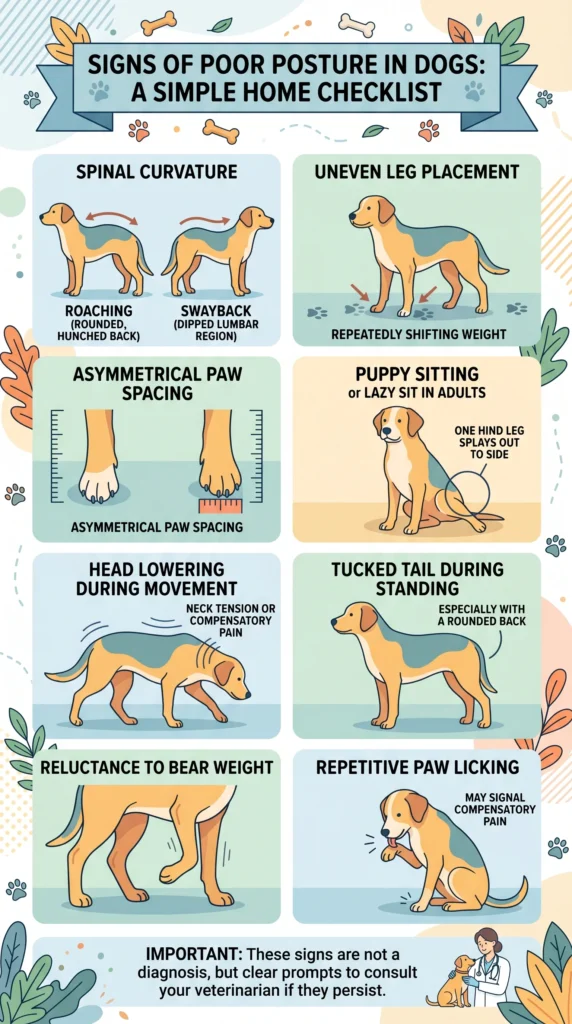
Poor dog posture often appears gradually, making it easy to miss until patterns become more obvious. Here is what to look for during your next at-home observation:
- Spinal curvature such as roaching (a rounded, hunched back) or swayback (a dipped lumbar region)
- Uneven leg placement or repeatedly shifting weight off one limb
- Asymmetrical paw spacing where one paw consistently sits wider or further forward
- Puppy sitting or lazy sit in adult dogs, where one hind leg splays out to the side
- Head lowering during movement, which can signal neck tension or compensatory pain
- Tucked tail during standing, especially combined with a rounded back
- Reluctance to bear weight on one side, even subtly
A consistently tucked tail and rounded back together may signal discomfort the dog is trying to manage. These signs are not a diagnosis, but they are a clear prompt to pay closer attention and consult your vet if they persist.
You might also notice your dog licking their paws more than usual. Repetitive paw licking can sometimes be connected to compensatory posture patterns causing discomfort, as a dog shifts weight onto areas not designed to carry it.
For more information check out our complete guide Anatomy of a Dog Skeleton.
How to Assess Your Dog’s Posture at Home
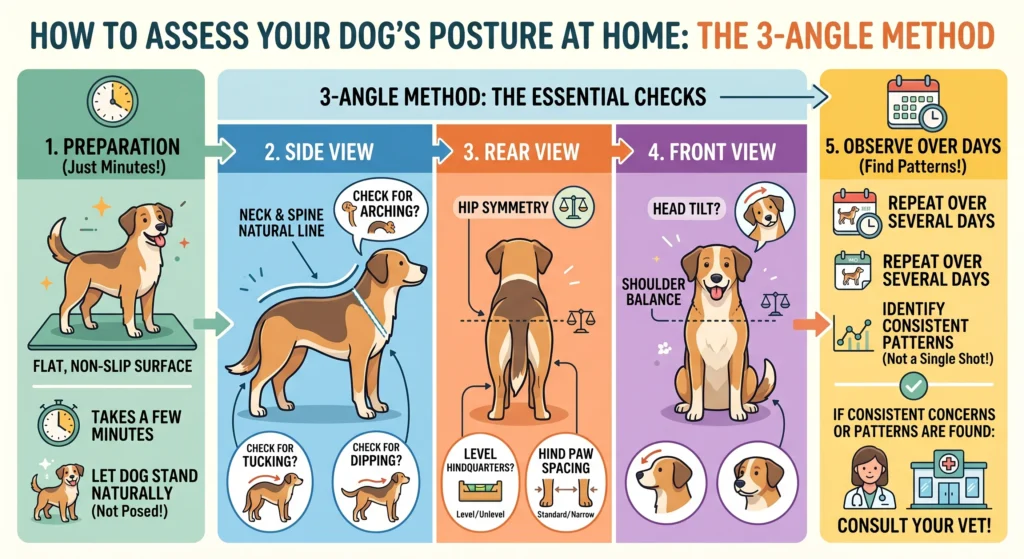
Evaluating your dog’s posture takes only a few minutes on a flat, non-slip surface. Use a three-angle method:
Side View
Check whether the spine and neck form a natural line, or whether there is arching, dipping, or tucking.
Rear View
Look at hip symmetry, hind paw spacing, and whether both hindquarters appear level.
Front View
Observe shoulder balance and check for any head tilt.
Let your dog stand naturally rather than in a posed position. Repeat this over several days to identify consistent patterns rather than drawing conclusions from a single observation.
Why Poor Dog Posture Happens: From Puppies to Senior Dogs
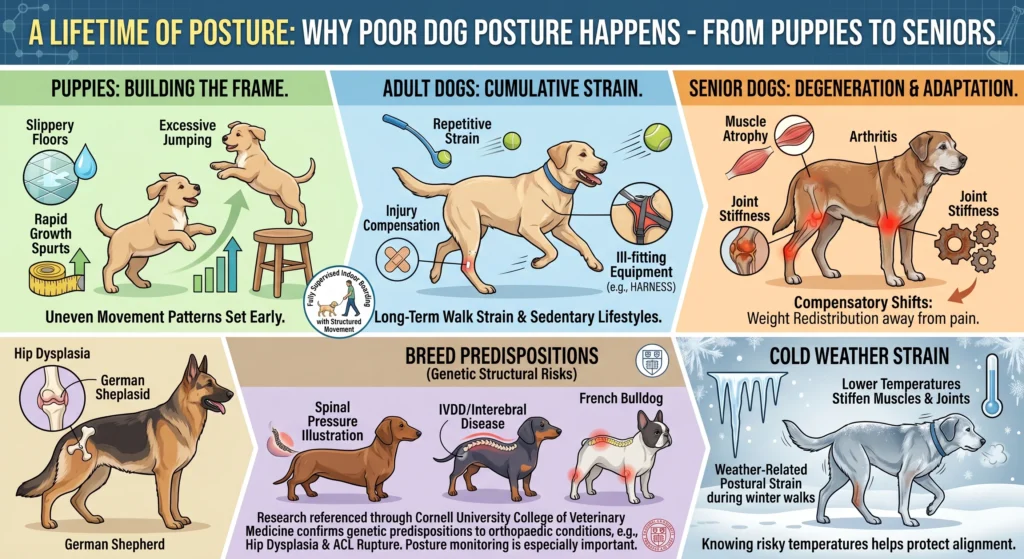
Poor posture develops across a dog’s lifetime for a variety of reasons, and understanding when and why it happens helps owners respond at the right time.
Puppies
Puppies are still building their musculoskeletal systems. Slippery floors, excessive jumping, and rapid growth spurts can set uneven movement patterns early that linger into adulthood if not addressed.
Adult Dogs
Adult dogs face repetitive strain from high-impact activities, sedentary lifestyles, injury compensation, and poor equipment fit. An ill-fitting harness can shift how a dog loads their shoulders and neck over thousands of walks. Dogs who spend time in a fully supervised indoor boarding facility with structured movement throughout the day have fewer opportunities to develop the sedentary patterns that contribute to postural decline.
Senior Dogs
Senior dogs experience muscle atrophy, arthritis, and joint stiffness that cause compensatory shifts in standing and movement. Seniors often redistribute weight away from painful joints, placing new strain on structures not built to carry that load.
Breed Predispositions
Breed matters significantly. German Shepherds, Dachshunds, and French Bulldogs carry genetic structural risks, including hip dysplasia and intervertebral disc disease. Research referenced through the Cornell University College of Veterinary Medicine identified breed-specific genetic predispositions to orthopaedic conditions, including hip dysplasia and ACL rupture, reinforcing why posture monitoring is especially important for predisposed breeds.
Cold Weather
Cold weather adds another layer. Lower temperatures stiffen muscles and joints, subtly changing how dogs move and stand. Knowing when temperatures become genuinely risky for walks helps protect against weather-related postural strain during winter months.
Dog Posture as an Early Warning System: What Changes to Watch For
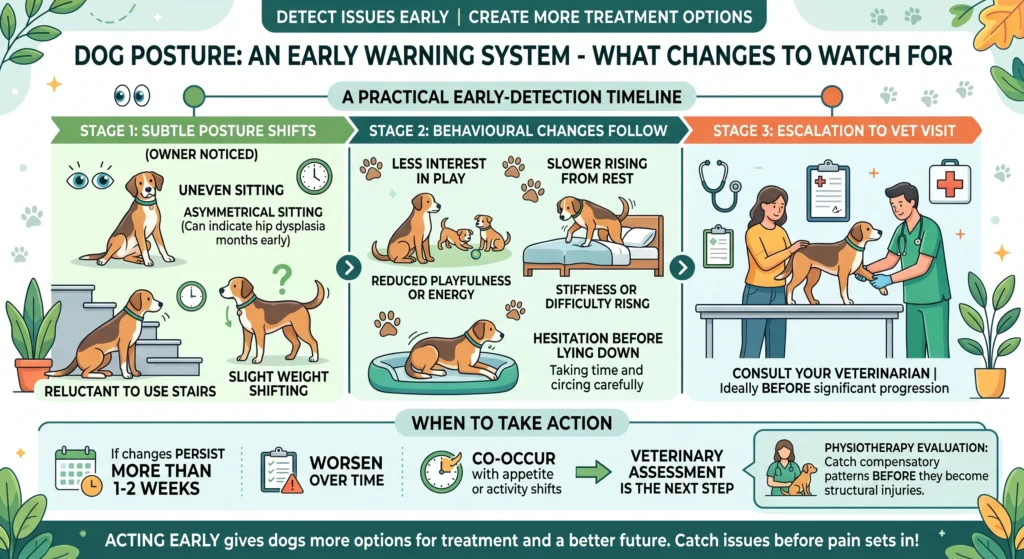
Posture changes are often the first observable signal that something is developing, before lameness, formal diagnosis, or obvious symptoms appear. A dog might begin sitting asymmetrically for months before being diagnosed with hip dysplasia. That early postural shift is information, and catching it early creates more options.
A Practical Early-Detection Timeline
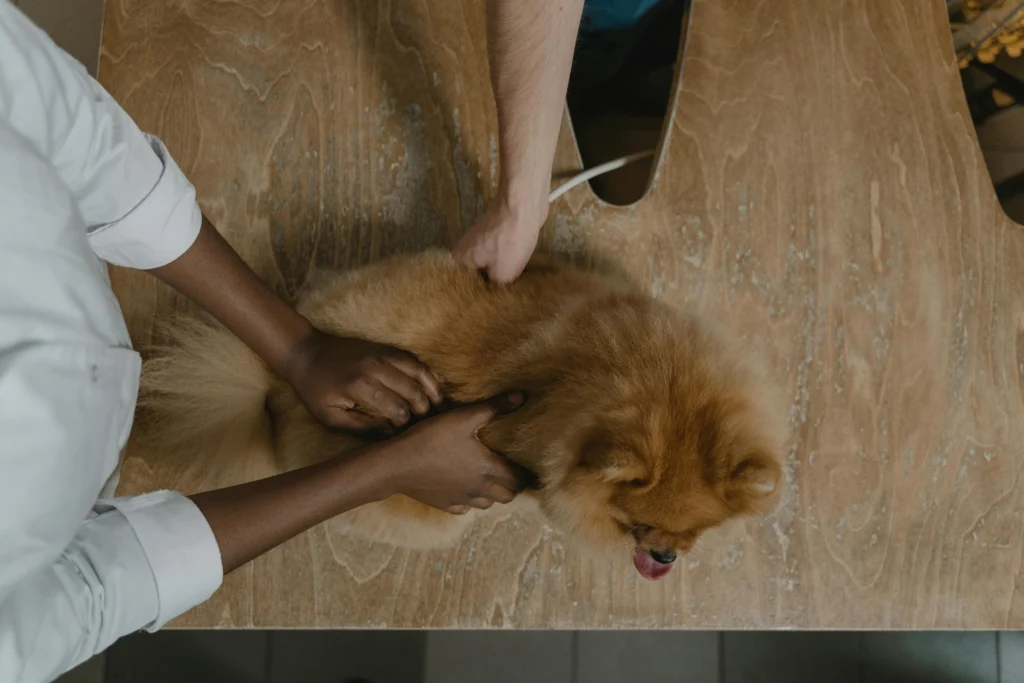
Stage 1: Subtle posture shifts the owner notices, including uneven sitting, reluctance to use stairs, and slight weight shifting.
Stage 2: Behavioural changes follow, including less interest in play, slower rising from rest, and hesitation before lying down.
Stage 3: The owner escalates to a vet visit, ideally before the condition has progressed significantly.
If posture changes persist for more than one to two weeks, worsen over time, or come alongside changes in activity or appetite, a veterinary assessment is the right next step. A physiotherapy evaluation can also catch compensatory movement patterns before they become structural injuries. Acting before pain sets in consistently gives dogs more treatment options and a better path forward.
How to Improve Your Dog’s Posture: Exercises and Daily Habits
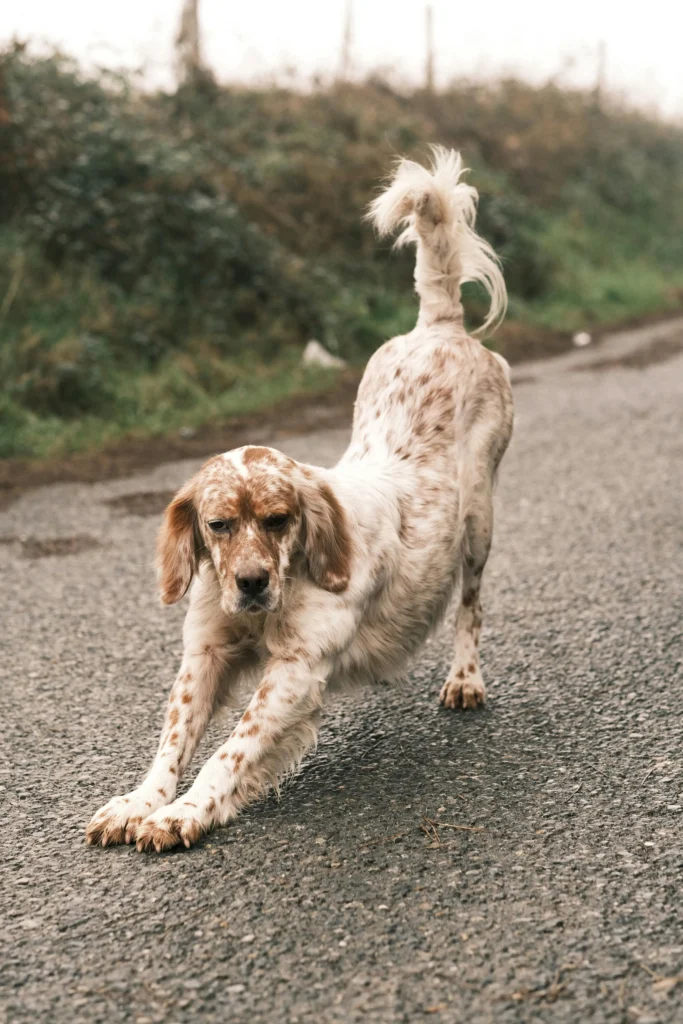
Improving posture in dogs is built on consistent, low-intensity daily effort rather than occasional intense sessions. The goal is to gradually strengthen the muscles that support healthy alignment so the body learns to maintain it naturally. Just as any new physical habit takes time to stick, postural conditioning works best when it is introduced gradually and kept up steadily: small, regular efforts create lasting structural support.
Environmental Adjustments
Environmental adjustments make a real difference from day one. Non-slip flooring changes how dogs load their joints. Raised food bowls reduce neck strain in larger breeds. Limiting high-impact jumping protects spinal alignment over the long term. Equipment fit matters too, as a well-fitted harness prevents uneven shoulder loading during walks.
Regular coat maintenance also plays a role, as heavy or matted fur can restrict movement and mask postural changes that would otherwise be easy to spot, which is part of why professional grooming on a consistent schedule supports your dog’s overall physical awareness.
Three Targeted Postural Exercises for Dogs
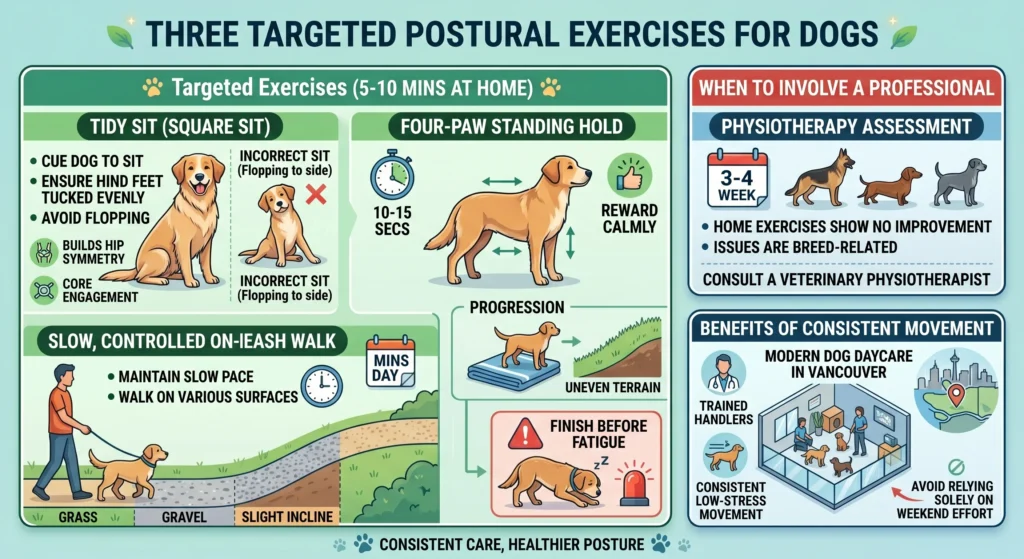
These targeted postural exercises each take five to ten minutes and can be done at home:
Tidy sit (square sit): Cue your dog to sit with both hind feet tucked evenly under the hips rather than flopping to one side. Builds hip symmetry and core engagement with every repetition.
Four-paw standing hold: Ask your dog to stand still on an even surface for ten to fifteen seconds, then reward calmly. Progress to slightly uneven terrain like a folded towel or gentle grassy slope.
Slow, controlled on-leash walk: Walking on grass, gravel, or slight inclines naturally recruits stabilizing muscles. Keep the pace slow and always finish before the dog shows fatigue.
When to Involve a Professional
If home exercises do not show improvement within three to four weeks, or if posture issues are breed-related, a physiotherapy assessment is the sensible next step. Dogs who have regular access to dog daycare in Vancouver through a facility with trained handlers benefit from consistent, low-stress movement across every visit rather than relying solely on weekend effort.
Your Dog Deserves to Move Well for Life
Your dog’s posture is one of the clearest windows into how they are feeling and how their body is holding up over time. Paying attention from puppyhood through the senior years gives you the best chance of catching problems early and keeping your dog comfortable and mobile for years to come.
If you are looking for a place where your dog gets genuine daily exercise, structured play, and attentive care from trained handlers every single day, reaching out to DogPlay is the first step. Book a trial daycare day and see what purposeful, well-supervised activity looks like in practice.