

If you’ve ever watched your dog pace the same path repeatedly, avoid other dogs for no obvious reason, or react strongly to everyday sounds, you may have found yourself wondering: Can dogs get autism? Dogs can’t be officially diagnosed with autism, but they can display a very similar condition. At DogPlay, we like to keep every dog parent up to date! Here’s what you actually need to know, and how to help.
Can Dogs Get Autism or Is It Something Else?

This is one of the most searched questions among dog parents, and it’s a fair one. Autism is a human neurodevelopmental disorder, so veterinarians don’t apply that diagnosis to dogs. What they do recognize is a condition called Canine Dysfunctional Behaviour (CDB), and if you’re asking can dogs be autistic, CDB is the closest equivalent.
CDB is believed to be linked to a lack of mirror neurons, which are the brain cells that help individuals learn social behaviours by observing others. In dogs, this means they may struggle to pick up on social cues from other dogs or humans, leading to behaviours that look a lot like what we associate with autism in people.

Dogs are born with CDB. It isn’t something that develops later in life, and there is currently no cure. With the right support and environment though, dogs with CDB can live happy, comfortable lives.
At DogPlay, we ask every new dog parent about their dog’s personality, sensitivities, and any behaviours they’ve noticed at home before the first visit. That information shapes how we approach every dog from day one, and it makes a real difference.
Dog Autism Symptoms and Signs to Watch For

Knowing the signs of autism in dogs, or more accurately CDB, can help you get your dog the support they need sooner rather than later. Here are the most common things to look for.
Repetitive Behaviours
They’re are usually the most visible. This includes excessive tail chasing, spinning in circles, pacing the same path over and over, or fixating on a specific object or spot. We’ve seen dogs at DogPlay that would circle the same area of the room every time the energy picked up around them. It’s not bad behaviour. It’s a coping mechanism.
Social Withdrawal
A dog with autism-like traits may avoid eye contact, show little interest in playing with other dogs, ignore friendly approaches from humans, or not respond when their name is called. These dogs often find social interaction genuinely overwhelming, and pushing them into it tends to make things worse.
Sensory Sensitivities
They can show up as overreactions to everyday stimuli. A dog that panics at the sound of a vacuum cleaner, flinches when touched gently, or refuses food based on texture or smell may be dealing with heightened sensory processing.
Unusual communication patterns
Things like flat body language, no tail wagging when happy, excessive whimpering without a clear cause, or a blank unfocused stare can all be indicators.
It’s worth noting that many of these signs overlap with other conditions like separation anxiety, OCD, hypothyroidism, or even pain. That’s exactly why a professional evaluation matters before drawing any conclusions.
What Causes Autism-Like Behaviour in Dogs?

The honest answer is that the exact causes aren’t fully understood yet. Research is still in early stages when it comes to whether do dogs get autism and what drives it. What we do know is that genetics play a significant role.
CDB is far more common in certain breeds, with Bull Terriers being the most studied. One veterinary behaviourist at Tufts University found that up to 85% of Bull Terrier litters showed compulsive tail-chasing behaviour. Miniature Poodles have also shown higher rates of autism-like traits.
Male dogs appear to be more commonly affected than females. Early life experiences and environmental factors may also contribute, though pinpointing specific triggers remains difficult.
If your dog shows signs of autism with dogs or CDB-like traits, it’s not something you caused. It’s not a training failure. These dogs are simply wired differently, and they need an approach that reflects that.
How to Support an Autistic Dog at Home and in Daycare

Predictability is one of the most powerful tools you have. Fixed feeding times, regular walks on familiar routes, and a stable daily rhythm help dogs with CDB feel secure and reduce anxiety over time.
Use positive reinforcement exclusively
Punishment-based training is counterproductive for any dog, but it’s especially harmful for dogs showing autism in dogs traits. Reward the behaviours you want to see, keep sessions short, and celebrate small wins.
Create a low-stimulation retreat
Every dog benefits from a space to decompress, but for dogs with sensory sensitivities it’s essential. A quiet corner with soft bedding, away from noise and foot traffic, can significantly reduce stress throughout the day.
Introduce new things slowly
New people, new environments, and new routines should always be introduced gradually. Too much too soon tends to backfire with sensory-sensitive dogs.
When dogs with these kinds of needs come through our dog daycare in Vancouver, we adjust our approach based on what each dog needs. Smaller groups, quieter spaces, more one-on-one time with staff. We work with the dog, not against them.
Our team is on-site 24/7, including an overnight staff member, so there’s always someone who knows each dog’s needs and can respond in the moment.
If you’re considering dog daycare for a dog that tends to be socially hesitant or behaviourally different, a trial day is a great way to see how they do in a real environment with trained eyes watching closely.
When to Talk to a Professional About Your Dog’s Behaviour

Whether your dog has been evaluated by a vet or you’re simply noticing some of these behaviours at home, there are practical things you can do right now.
Start With Your Veterinarian
If you’re noticing several of the signs above, especially if they’re intensifying or getting in the way of your dog’s quality of life, your first call should be to your vet. A full medical workup helps rule out underlying conditions like hypothyroidism, chronic pain, or neurological issues that can look a lot like CDB from the outside.
Bring in a Veterinary Behaviourist
Once medical causes are ruled out, a veterinary behaviourist can conduct a thorough behavioural assessment and put together a management plan built specifically around your dog. There’s no standardized test for CDB, so their evaluation will be based on observed behaviour, your dog’s history, and patterns they identify over time.
Sometimes a Fresh Set of Eyes Catches What You Miss
Something we see at DogPlay fairly often is dog parents being the last to notice certain behavioural patterns. It makes complete sense. You’re used to your dog. A trained team in a new environment can catch things that are easy to miss at home. We’ve had plenty of conversations with dog parents where we flagged something we noticed during a stay, and most of them are grateful to have that information. If something feels off with your dog, trust that instinct and get it checked out.
Final Words: Ready to Find Your Dog a Place That Gets Them?
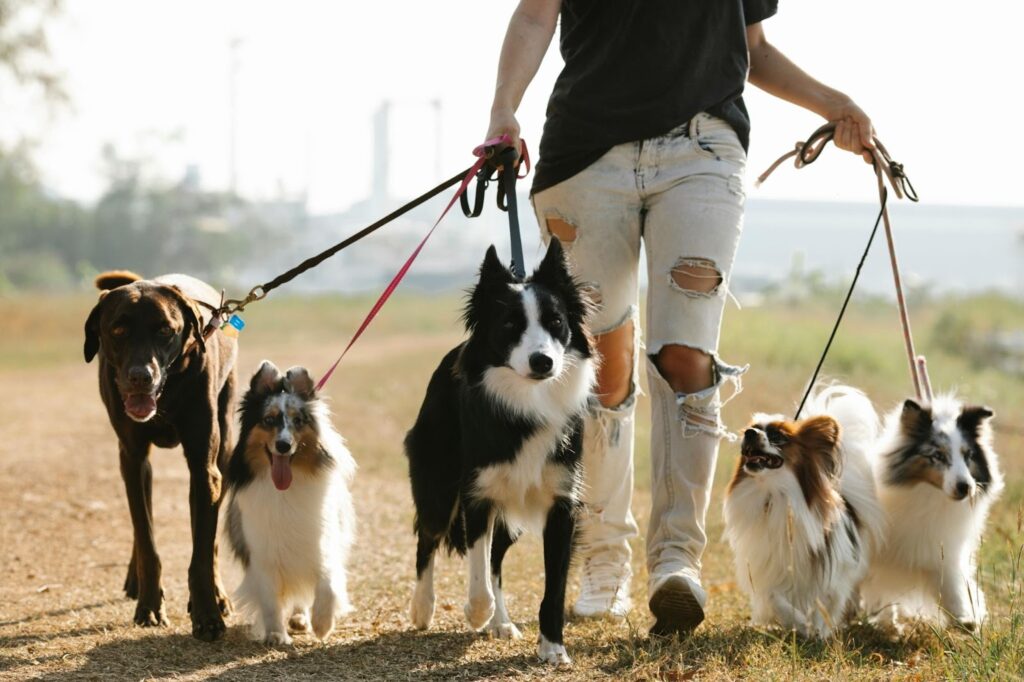
Do dogs get autism? Not officially, but canine dysfunctional behaviour is real, recognizable, and very manageable with the right approach. Dogs displaying these traits aren’t broken. They just need owners, caregivers, and facilities that take the time to understand them.
At DogPlay, that’s the kind of care we bring to every dog that walks through our doors. If you have questions about whether dog daycare or dog boarding in Vancouver is the right fit for your dog, create an account on our website to get started. We’d love to meet them.
FAQs About Can Dogs Have Autism?

Can dogs suffer from autism officially?
No. Autism is a human diagnosis. Dogs can display a condition called Canine Dysfunctional Behaviour which shares many similarities with autism, but the two are not the same thing.
What are the most common dog autism symptoms?
Repetitive behaviours like tail chasing or pacing, social withdrawal, limited eye contact, sensory sensitivities, and unusual communication patterns are the most frequently observed signs.
Is there a test to diagnose CDB in dogs?
There is no standardized diagnostic test. A veterinary behaviourist will assess behaviour, medical history, and observed patterns to reach a conclusion.
Can a dog with autism-like traits go to daycare?
Yes, in many cases. It depends on the individual dog and the facility’s ability to accommodate their needs. A trial day at a well-staffed facility is a great first step.
FAQs About DogPlay

Where is DogPlay located?
DogPlay is located at 8849 Selkirk Street, Vancouver, BC, about 7 minutes from YVR and 5 minutes from Richmond.
What services does DogPlay offer?
DogPlay offers dog daycare, overnight boarding, and grooming, all under one roof and open 365 days a year.
Does DogPlay have overnight staff?
Yes. Unlike many facilities that rely on cameras and alarms, DogPlay has a trained team member on-site overnight, sleeping in a room connected to the boarding suites so dogs are never left alone.
Does DogPlay accept dogs with special behavioural needs?
We assess every dog individually. Quirky behaviour, social hesitancy, and sensory sensitivities don’t automatically disqualify a dog. We’re committed to finding what works for each dog in our care. You can also explore our dog grooming Vancouver services if your dog needs a little extra attention during their visit.