
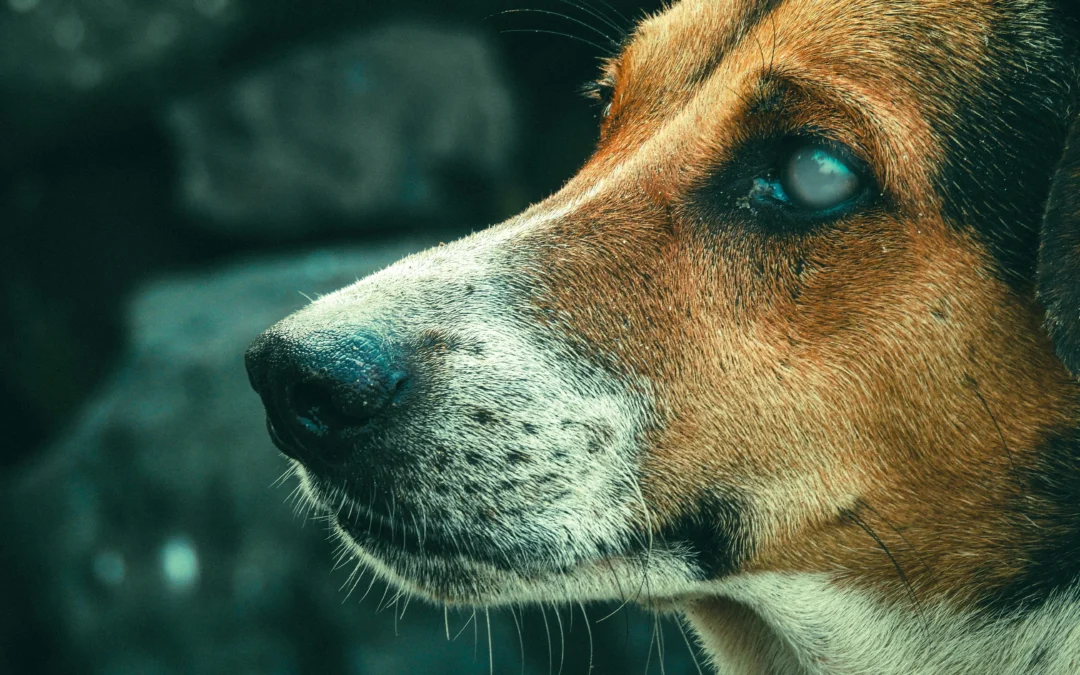
Can dogs see in the dark? Not in pitch-black conditions, but their low-light vision easily beats ours. Larger pupils, more light-sensitive rod cells, and a reflective layer called the tapetum lucidum help dogs make the most of whatever light is around, which is part of why an overnight stay or an evening walk rarely fazes them. Here’s a practical breakdown from the team at DogPlay.
Can Dogs See in the Dark? Here’s What’s Actually Happening
Most dog owners assume their dog navigates the dark purely on instinct. The reality is more interesting than that.
It Starts With Evolution
Dogs evolved from wild canines that were most active at dusk and dawn. To track and catch prey in dim light, they needed sharp low-light vision, and that biological advantage carried forward into the dogs we live with today. How the dogs see the world at night is directly tied to this evolutionary history, and understanding it helps explain a lot of the behaviour you probably already notice after sunset.
Dog Eye Anatomy: The Building Blocks of Canine Vision
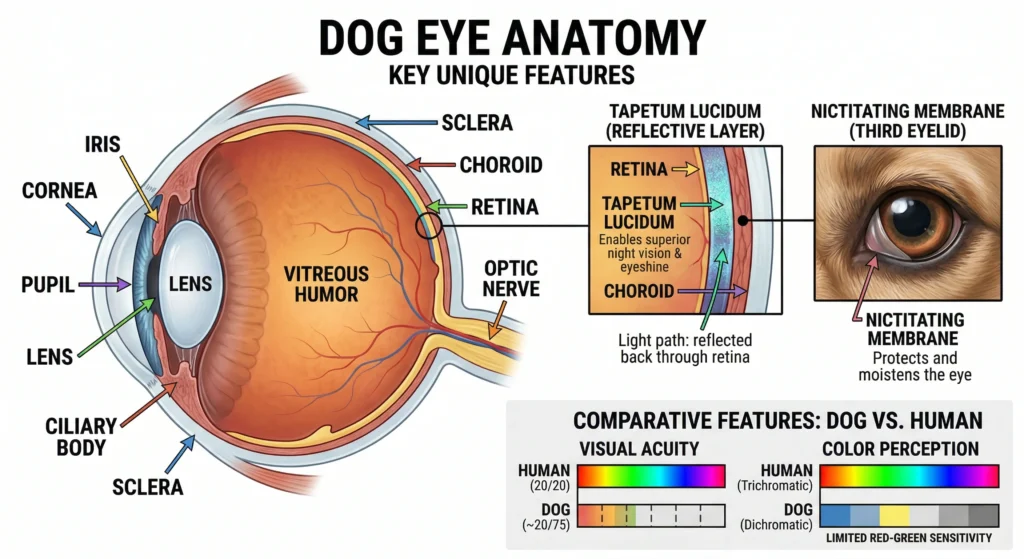
Before getting into the night vision specifics, it helps to understand how the eye vision of dogs is structured.
A dog’s eye works much like a human eye: the cornea focuses incoming light through the pupil, which is controlled by the iris, and the lens sharpens that image before projecting it onto the retina. On the retina, light is converted into electrical signals and sent to the brain via the optic nerve. The key differences are in the details of that structure, and those details matter enormously when the lights go out.
Canine Night Vision: Three Advantages Dogs Have Over Humans
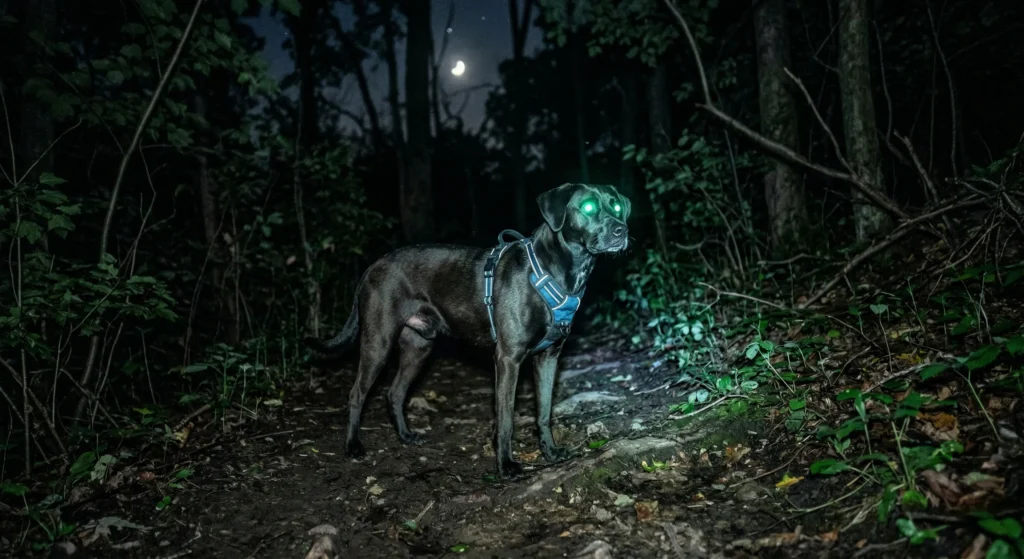
To understand how well dogs see in the dark, it helps to know what’s actually happening inside their eyes. Several key structures work together to give dogs their low-light advantage.
The Tapetum Lucidum
The tapetum lucidum is a reflective layer of tissue sitting just behind the retina. It acts like a mirror, bouncing light back onto the retina a second time so the eye gets two chances to register it. This is what causes that greenish glow in photos, and it’s one of the main reasons dogs need significantly less light than we do to see their surroundings.
Rods vs. Cones
The retina contains two types of photoreceptor cells: rods and cones. Rods are sensitive to low light and detect motion and shape. Cones handle colour and fine detail in bright conditions. Dogs have a rod-dominated retina, meaning the majority of their photoreceptor cells are built for low-light performance. For a deeper look on how dogs see in the dark it’s worth knowing about how these dog eye structures actually function.
Pupil Size
Dogs have significantly larger pupils than humans. A bigger pupil means more light enters the eye, which directly improves visibility in darker conditions.
How Well Do Dogs See in the Dark Compared to Humans?
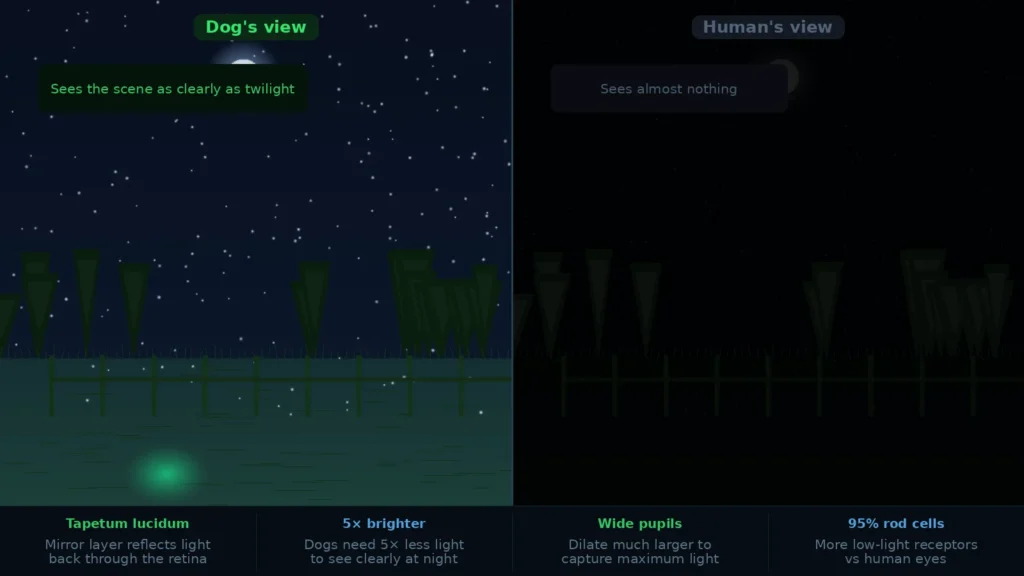
Better, without question. Dogs can detect motion and navigate spaces in light conditions that would leave a human fumbling for a wall switch. That said, do dogs see in dark environments perfectly? No. They still need some light. In true total darkness, no amount of tapetum lucidum will help, and your dog will rely primarily on smell and hearing instead.
That said, dogs do have trade-offs. Their colour perception is more limited. They primarily see blues and yellows. Their visual acuity is lower, meaning finer details are harder to make out. And their depth perception is generally weaker than ours. Dog eyesight at night is where dogs excel. Daytime detail is where humans have the edge.
At DogPlay, we keep low warm lighting on in the boarding area overnight for exactly this reason. Dogs can navigate in very low light, but a soft nightlight gives them the visual grounding they need to feel oriented in an unfamiliar space, especially on a first overnight stay.
What Does Dog Vision Look Like at Night?
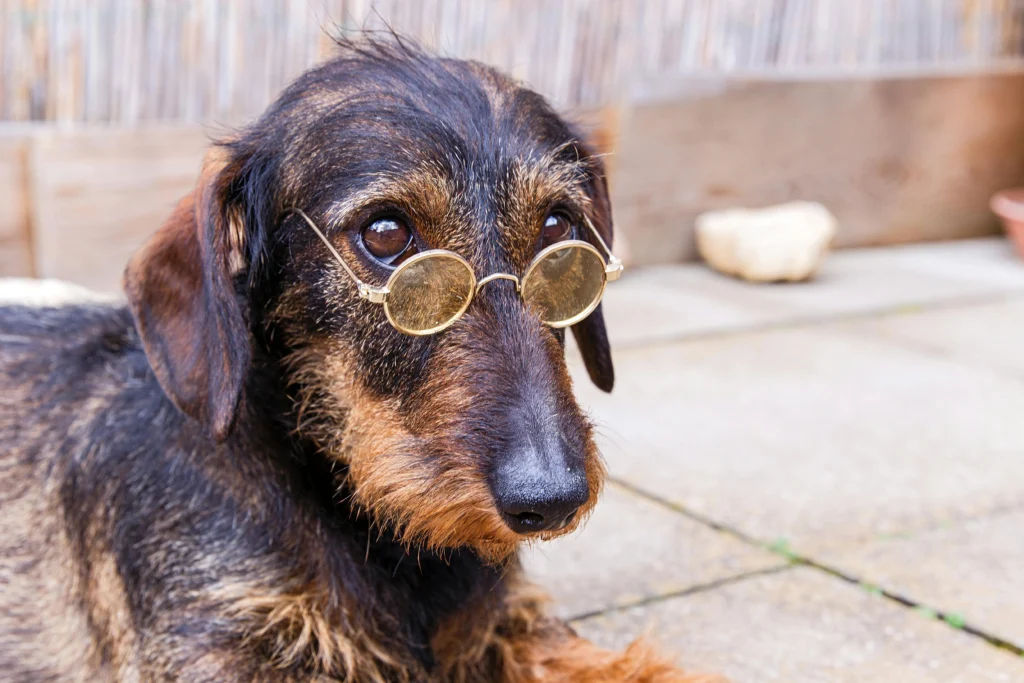
Dog eyesight at night is not the same as human vision with a brightness filter applied. Dogs see fewer colours than we do at the best of times, limited mainly to yellows and blues. At night, colour perception drops further for everyone. What dogs gain is motion sensitivity. A dog can detect a moving object at distances that would be invisible to a human in the same lighting, which explains why your dog alerts to things on an evening walk long before you notice anything at all.
Do Dogs Have Nocturnal Vision Like Cats?
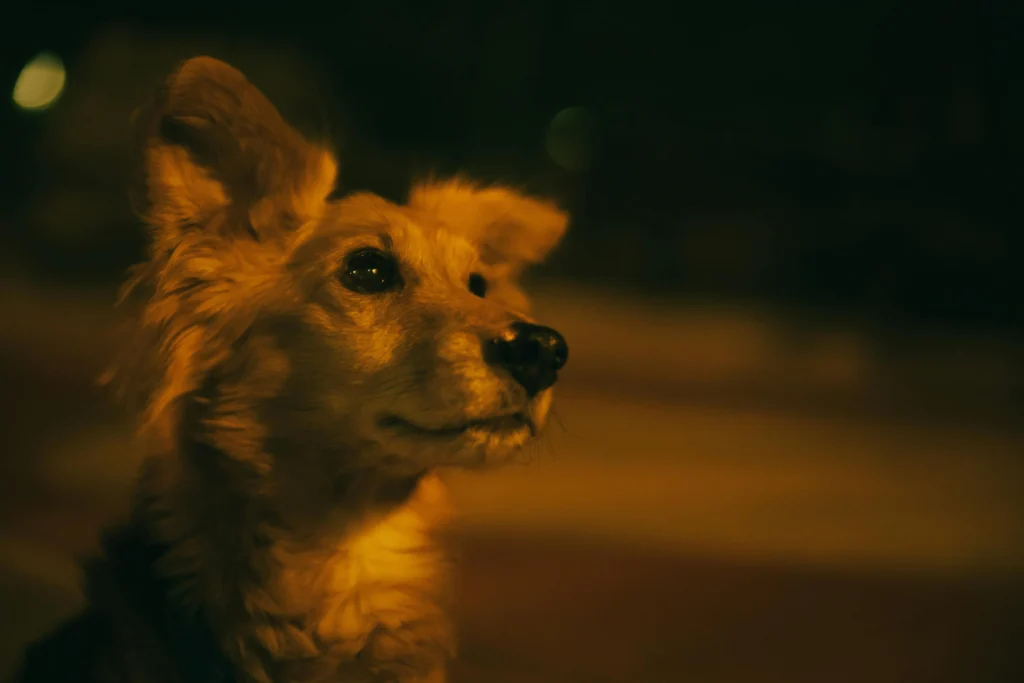
Not quite. Cats are genuinely nocturnal animals and their low-light vision is sharper than a dog’s. A cat’s tapetum lucidum reflects significantly more light, and their vertical-slit pupils allow for greater light intake. Do dogs have nocturnal vision? They have excellent low-light vision, but calling it nocturnal overstates it. Dogs are better described as crepuscular, built for dusk and dawn rather than true darkness.
Should You Leave a Light on for Your Dog at Night?
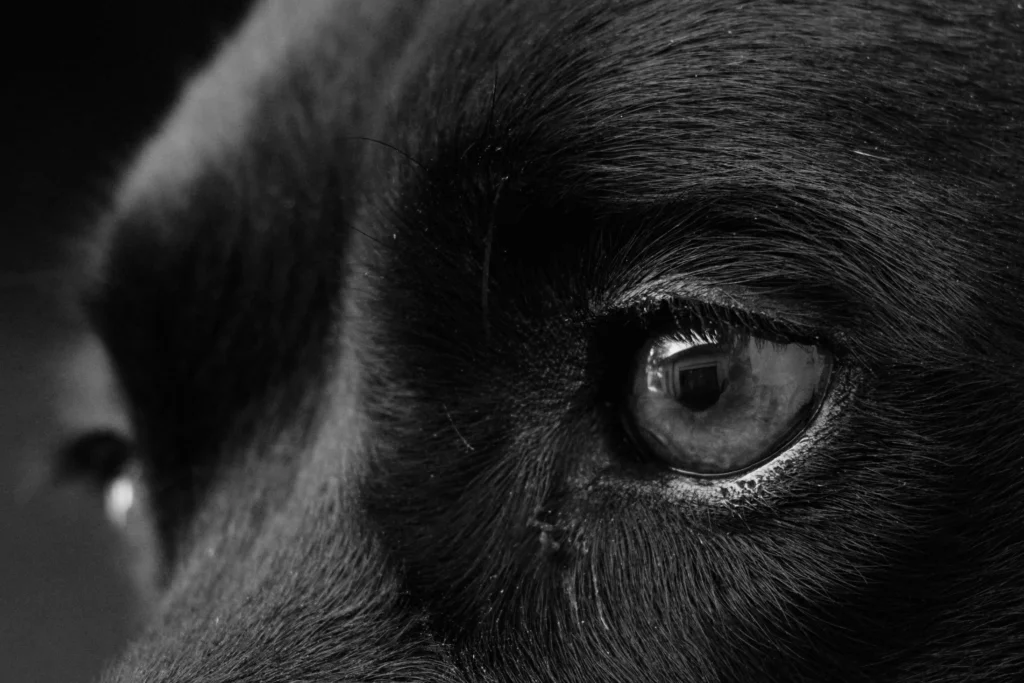
Yes, especially if your dog is in an unfamiliar space. This comes up regularly at our dog boarding facility. Dogs dropped off for an evening stay, particularly first-timers, take longer to settle than morning arrivals. Part of that is the light shift. They’ve come from a bright home environment and suddenly they’re navigating a new space as the light is dropping.
We account for this at DogPlay by keeping intake areas well-lit and giving evening arrivals more time to acclimate before moving them to the boarding area. A simple nightlight makes a real difference.
What We See at DogPlay After Dark
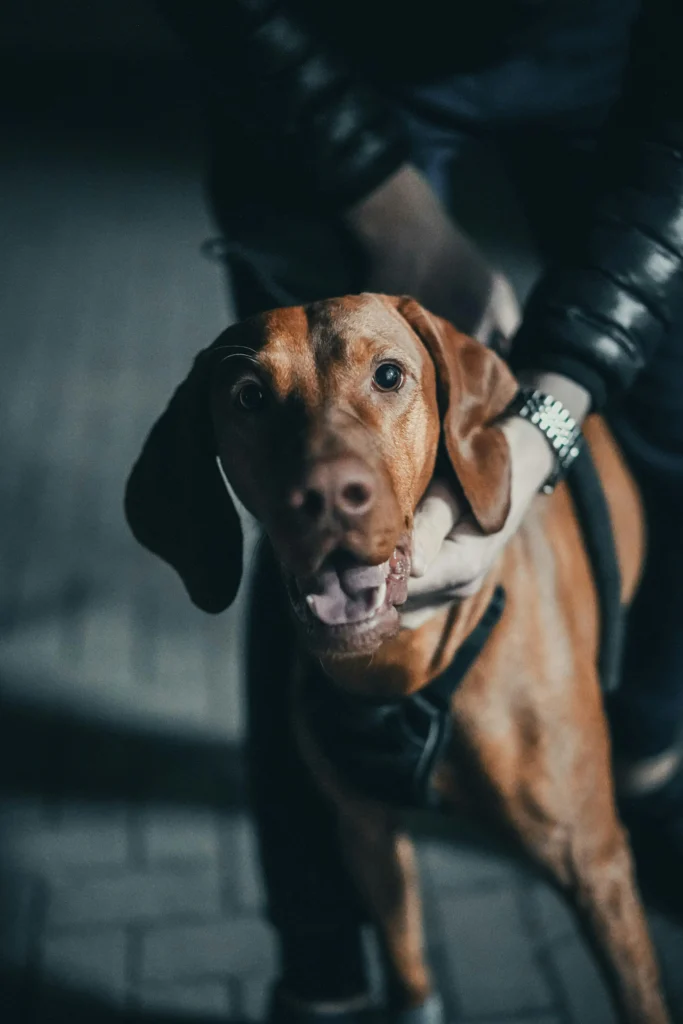
The difference between a returning boarder and a first-timer is visible the moment the lights dim. Dogs who’ve stayed with us before move through the space confidently at night. New dogs are more cautious, pausing frequently and using their nose to fill in what their eyes are still mapping.
We had a Dachshund named Pepper come in for her first evening drop-off completely wide-eyed and shaky. We kept the lighting slightly brighter than usual in her sleeping area for the first night, and had our overnight handler spend extra time with her before bed. By morning she was eating well and trotting the hallways like she owned the place. Small environmental adjustments make a big difference for dogs adjusting to new overnight spaces. If you’re looking for a dog daycare in Vancouver that thinks about these details, that’s exactly the kind of care we provide at DogPlay.
Evening Walks in Marpole: What Your Dog Is Actually Experiencing
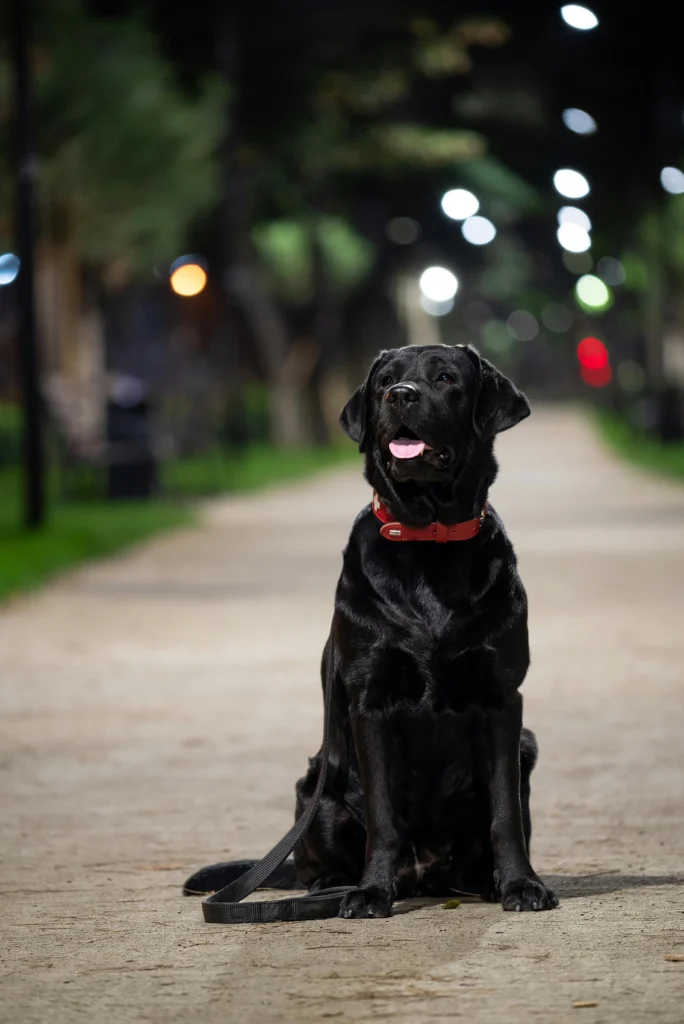
The Fraser River foreshore trail near DogPlay is genuinely beautiful after dark, but the lighting is patchy in sections. On an evening walk, your dog is doing a lot more sensory work than you are. Their nose leads, their eyes confirm, and their motion detection picks up things you won’t notice until your dog is already reacting.
A few practical tips for evening walks:
- Use a reflective leash or harness so your dog is visible to cyclists and other pedestrians
- Watch your dog’s body language — frequent stopping and environmental scanning means they’re picking up on something
- Trust those pauses rather than rushing them through. Dogs aren’t operating blind, but they’re working harder than they do in daylight
For dogs heading into an evening dog daycare session or a first boarding drop-off, that extra sensory effort is worth keeping in mind at drop-off time.
Sunset Is Just the Beginning for Your Dog
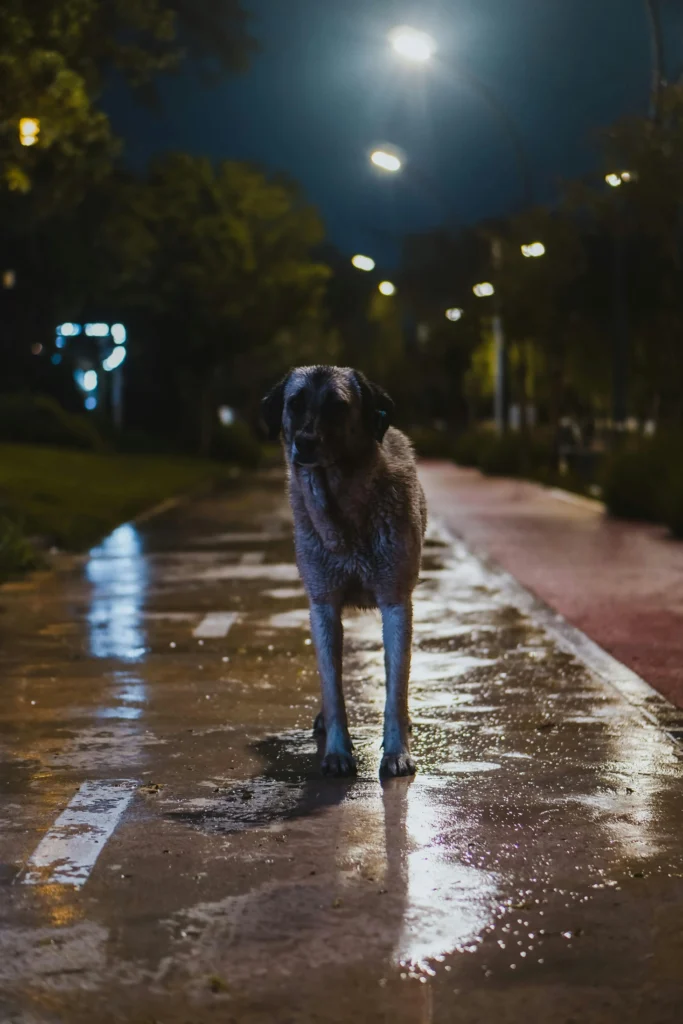
Can dogs see in darkness the way humans imagine? Not quite. But they are far better equipped for low-light environments than most owners realise, with a combination of anatomy, motion sensitivity, and sensory backup systems that make them genuinely capable after dark. Understanding how dogs see in the dark helps you make smarter decisions about evening walks, overnight stays, and the environments you put them in. Your dog is out there reading the world in ways you’ll never fully see. The least we can do is set them up well for it.
If your dog is due for a boarding stay or a dog grooming appointment, come visit us at DogPlay at 8849 Selkirk Street in Marpole. Get in touch to book their stay today. We’d love to meet them.