

Quick Answer: Can Dogs Eat Mango?
Can dogs eat mango is one of those questions that comes up the moment a curious nose appears beside a cutting board. Mango smells sweet, looks harmless, and feels healthier than a processed treat—but fruit can be tricky for dogs. Some are perfectly safe. Others can cause real problems if served the wrong way. Knowing where mango falls (and how to offer it safely) helps dog parents share treats without risking digestive upset or discomfort.
For busy dog parents balancing work, travel, and daily life, safety and simplicity matter. That same mindset applies beyond the kitchen. At DogPlay, dogs are cared for with a safety-first approach across daycare, boarding, and grooming—so thoughtful decisions, including treats and enrichment, are never left to chance.
Is Mango Safe for Dogs and What Parts Should Be Avoided?
The short answer is yes—but only the soft flesh. Mango skin is fibrous and difficult for dogs to digest, so it should always be removed before serving. The pit (or seed) is even more concerning. It poses a serious choking risk, can cause intestinal blockages, and contains trace compounds that are unsafe if chewed.
Sugar is another factor to keep in mind. Mango is naturally sweet, and too much can lead to diarrhea or stomach upset, especially for dogs with sensitive digestion or weight concerns.
Related: Dog Diarrhea: Causes, Treatments, and When to Call the Vet
How Much Mango Can Dogs Eat Safely?
When it comes to how much mango dogs can eat, moderation matters more than the fruit itself. Mango should remain a treat, making up no more than about 10% of a dog’s daily calories. For small dogs, that’s usually one or two small cubes. Larger dogs may tolerate a few more pieces, but it should still be a modest portion.
If you’re wondering how much mango to give a dog, start small the first time and watch for any digestive changes. Puppies, seniors, and dogs with underlying health issues may need even smaller servings—or none at all.
Benefits of Mango for Dogs When Fed in Moderation
There are genuine benefits of mango for dogs when it’s offered as an occasional treat. Mango provides fiber, which can support regular digestion in small amounts, plus vitamins like A and B6 that help with normal body functions such as skin and coat health. It also contains antioxidants (including beta-carotene), which help protect cells from everyday wear and tear. The main advantage for most dogs, though, is simple: mango is a fresh, high-value treat that can make training, enrichment, or “trade” moments easier without relying on heavily processed snacks. Keep it occasional, and it stays a fun bonus—not a source of extra sugar or tummy trouble.
In structured environments like a dog daycare in Vancouver, treats and enrichment foods work best when they’re used intentionally to support positive experiences, not as filler calories.
How to Prepare Mango for Dogs the Right Way
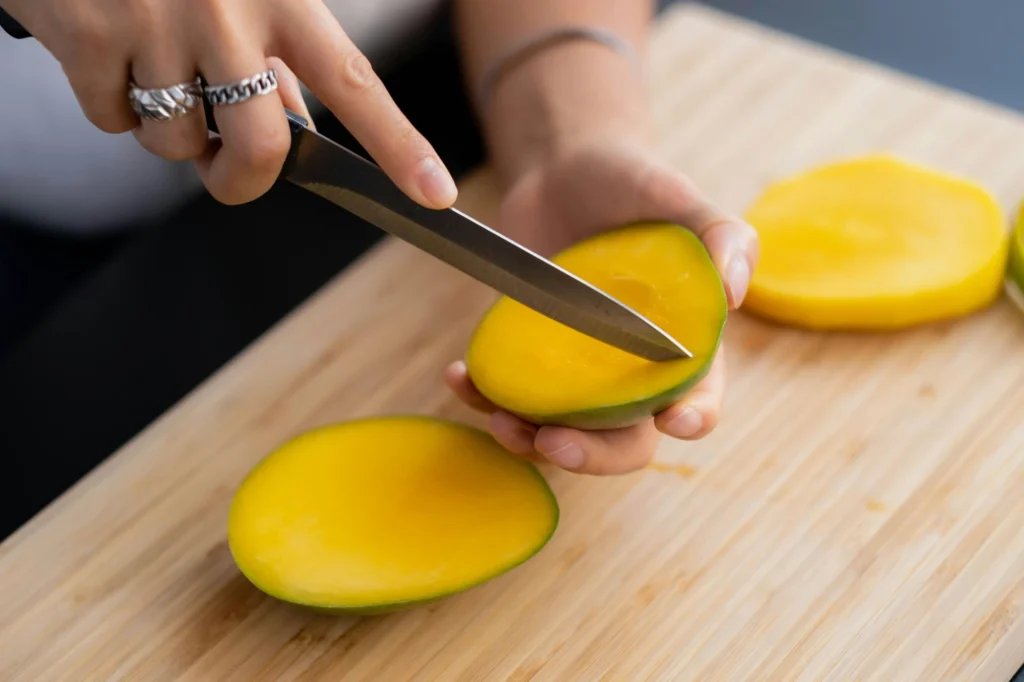
Preparing mango correctly is what makes it a safe treat instead of a stomach upset waiting to happen. Always peel the mango, remove the pit, and cut the flesh into bite-sized pieces that match your dog’s size. Fresh mango is the easiest option to portion and control. People often ask, can dogs eat dried mango, and the answer is yes—but only if it’s unsweetened and offered sparingly, since drying concentrates sugar and calories. Frozen mango can also work as an occasional enrichment treat, as long as the pieces are small and allowed to soften slightly before serving.
FAQs: Can Dogs Eat Mango?
Are Mangoes Toxic for Dogs?
Mango flesh is safe when ripe and prepared properly. Safety issues come from the pit, skin, or feeding too much at once, which can cause digestive upset or choking risks.
Is Mango a Laxative for Dogs?
Mango isn’t a laxative, but larger portions can loosen stools due to fiber and natural sugars. Small servings help avoid stomach discomfort.
Can Puppies Eat Mango?
Puppies can have mango occasionally in very small amounts. Because their digestive systems are more sensitive, fruit treats should be limited and introduced cautiously.
What Fruit Can Dogs Not Have?
Grapes and raisins are toxic and should never be fed. Cherries, citrus, and other fruits can also cause issues depending on preparation and quantity.
How Much Mango to Give a Dog?
A few small pieces are usually enough. Mango should be an occasional treat, not a regular part of a dog’s diet.
Book a Trial Day at DogPlay for Safe, Enriching Care While You’re Busy
Thoughtful nutrition is just one part of a dog’s overall wellbeing, and at DogPlay we take it seriously—making sure every dog is fed properly and that all dietary needs, sensitivities, and restrictions are carefully followed. Alongside supervised play, overnight care, and grooming services, our team pays close attention to the details that help dogs feel safe and comfortable while their humans are away.
If you’d like to see how it works in real life, book a trial day and experience our attentive, round-the-clock care firsthand. For more guidance on healthy food choices and everyday care tips, explore the DogPlay blog for trusted, practical advice.
RELATED READING:
Can Dogs Eat Broccoli? + The Best Way to Prepare It