
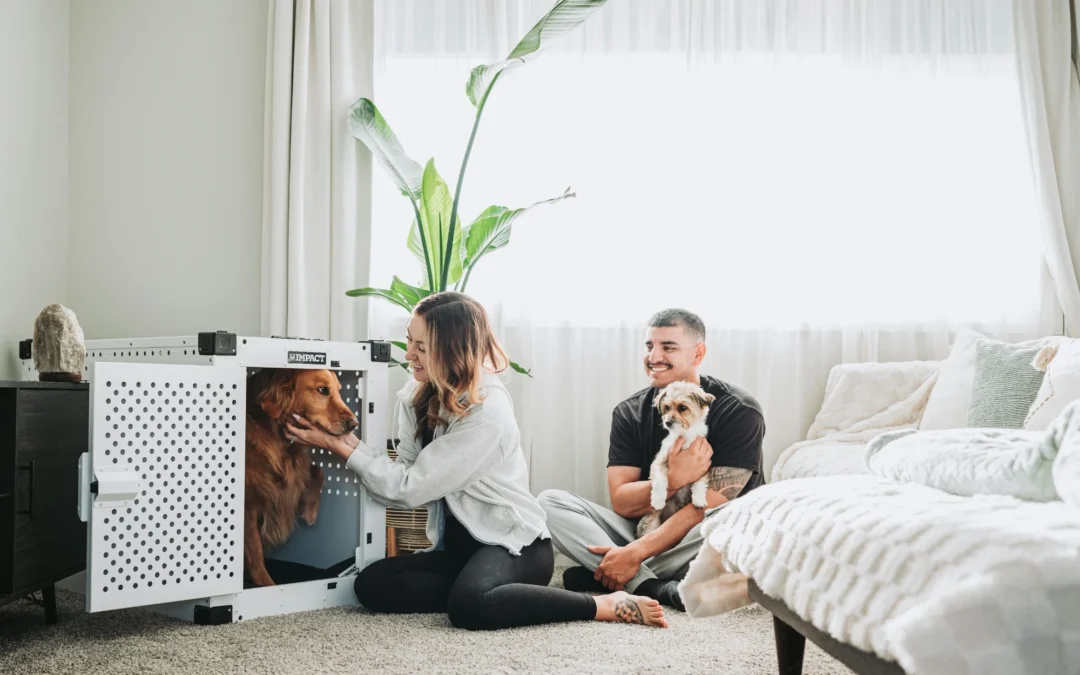
Crate training an adult dog can feel overwhelming, especially if your dog is already set in their ways or has had less-than-great experiences in the past. The good news is that learning how to crate train an adult dog doesn’t have to involve crying, guilt, or power struggles. When it’s done thoughtfully, crate training can actually reduce stress, improve routines, and give your dog a space that feels safe rather than restrictive. Adult dogs are capable learners, and with the right approach, they often surprise their humans with how quickly they adapt. By focusing on comfort, predictability, and trust, crate training can become part of a calmer daily rhythm instead of a constant battle.
At DogPlay, we work with adult dogs every single day through daycare, boarding, and grooming. We see firsthand how structure, rest, and positive routines help dogs settle—even those who were once resistant to crates or new environments. If you’re a busy dog parent juggling work, travel, or family life, this guide is designed to give you clear, realistic steps you can actually follow. And if crate training ends up being too stressful for your dog, there are supportive alternatives available.
How To Crate Train An Adult Dog: Quick Recap
- Learning how to crate train an adult dog is possible at any age when you focus on comfort, consistency, and trust rather than forcing compliance.
- Adult dogs may take longer than puppies because of past habits or experiences, but many actually learn faster thanks to better focus and emotional regulation.
- Successful crate training starts with the right setup, calm introductions, and gradually building positive associations with food, rest, and routine.
- Not every dog thrives with crate training, and alternatives like supervised care, daycare, or boarding can provide structure without added stress.
- A predictable daily rhythm—exercise, mental stimulation, rest, and supervision—makes crate training easier and helps adult dogs settle more calmly overall.
How To Crate Train An Adult Dog And Why It’s Not Too Late
One of the biggest misconceptions around crate training is the idea that it only works for puppies. Many dog parents worry whether it is too late to crate train an adult dog, especially if their dog is already anxious or independent. In reality, adult dogs are often better learners than puppies because they have longer attention spans and more emotional control. The challenge isn’t age—it’s undoing old habits or negative associations.
Understanding how to properly crate train a dog starts with reframing the crate as a tool for safety and rest, not confinement. Crates can help with travel, recovery from injury, vet visits, and providing a quiet place to decompress. Adult dogs, including rescues, benefit from knowing exactly where they can relax without being bothered. When you approach crate training calmly and consistently, you’re building trust rather than forcing compliance.
What’s Different About Crate Training An Adult Dog And How Long It Takes
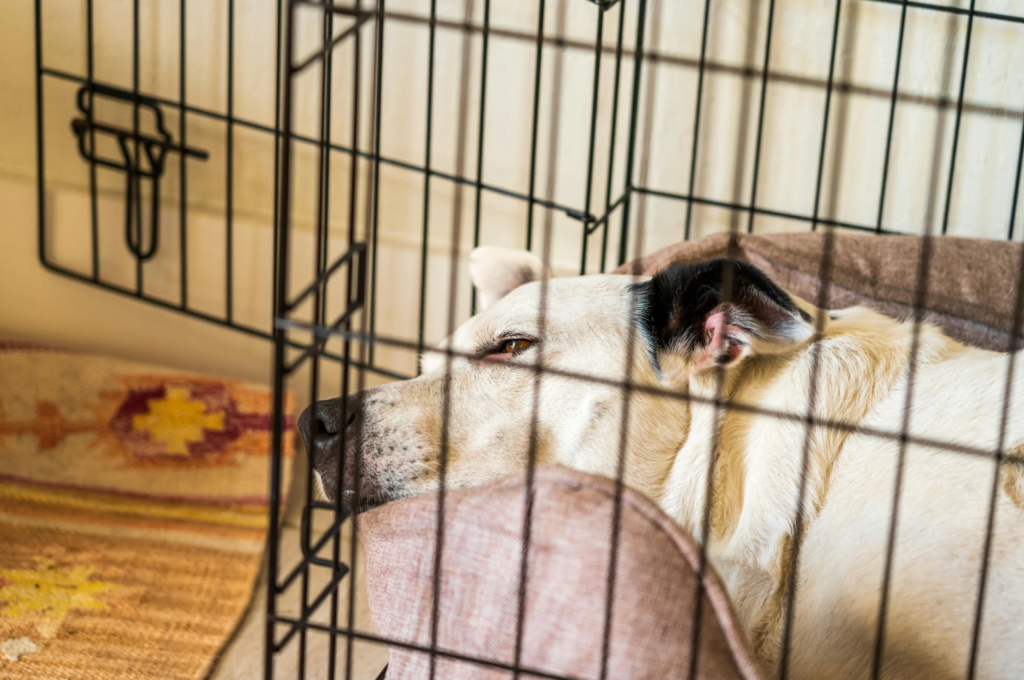
Crate training an adult dog looks different than training a puppy because adult dogs already have routines, preferences, and emotional history. Puppies adapt quickly because everything is new, while adults may need time to unlearn behaviors or fears tied to past experiences.
Many dog parents ask, “how long does it take to crate train a dog?” The honest answer is that it depends. Some adult dogs settle into crate routines within a few days, while others may need several weeks. Dogs with anxiety, trauma, or inconsistent schedules often take longer. Progress is measured by calm behavior, not speed. In daycare and boarding settings like DogPlay, we see that dogs with predictable daily routines—exercise, play, rest—adjust much faster to structured rest spaces than dogs without that consistency.
Crate Training Basics For Adult Dogs That Set You Up For Success
Before jumping into step-by-step training, it’s important to get the basics right. Many crate training issues stem from setup problems rather than the dog’s behavior.
Choosing The Right Crate Size And Type
The crate should be large enough for your dog to stand, turn around, and lie down comfortably, but not so large that it feels empty or overwhelming. Wire crates offer visibility and airflow, while plastic crates feel more enclosed and den-like. Soft-sided crates should only be used once a dog is already crate trained. Choosing the right setup is especially important if you’re figuring out how to crate train an adult rescue dog who may already associate crates with transport or stress.
Where To Place The Crate In Your Home
Location matters more than many people realize. Place the crate in a quiet but social area where your dog can see and hear normal household activity. Avoid isolating them in a basement or laundry room. Dogs settle best when they feel included but not overstimulated, a principle we rely on heavily in supervised boarding environments.
How To Make The Crate Feel Safe And Comfortable
Comfort turns a crate into a resting place instead of a trigger. Add soft bedding if your dog doesn’t chew it, and consider a light crate cover to block visual distractions. Familiar scents, like a worn T-shirt, can help nervous dogs relax. This is especially helpful when you’re working on crate training adult dogs without crying by reducing sensory overload.
How To Introduce The Crate Without Pressure
The crate should always be optional at first. Leave the door open and allow your dog to explore at their own pace. Never push or carry your dog into the crate. Let curiosity lead the way, especially if you’re learning how to crate train a dog that hates it due to past negative experiences.
How To Crate Train An Adult Dog Step By Step Without Stress
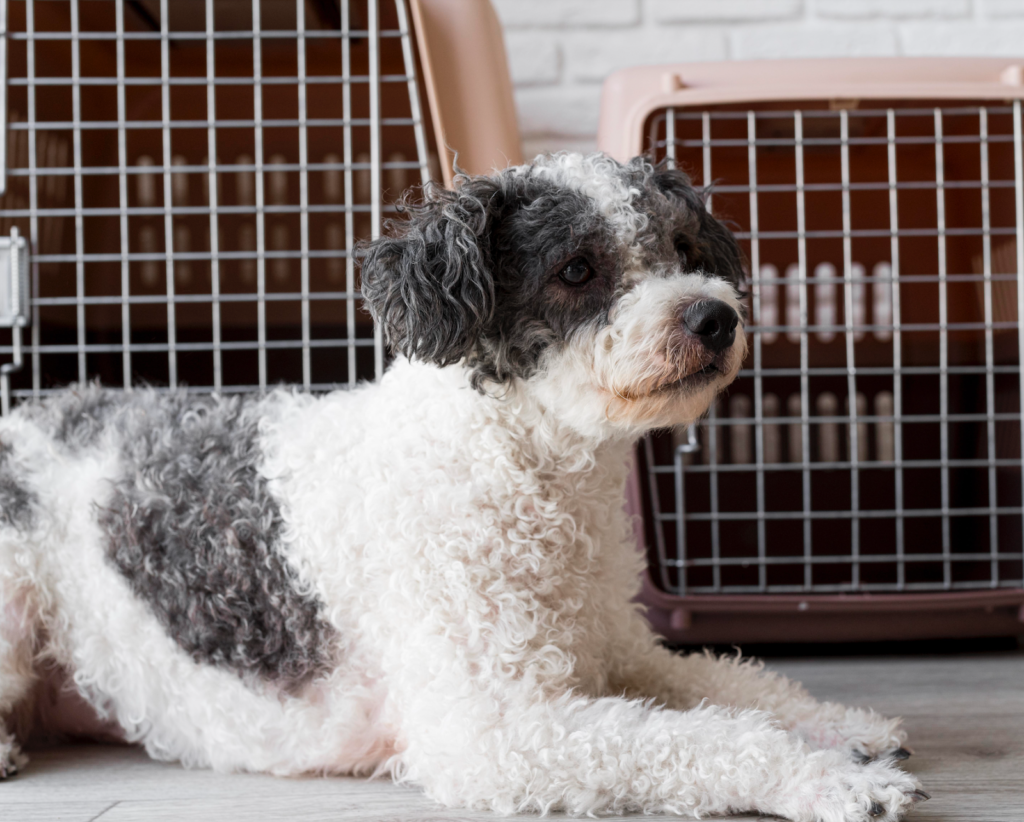
Once the foundation is set, you can move into structured training. Go slowly and let your dog’s comfort level guide your pace.
Step 1: Make Calm And Positive Introductions
Start by calmly walking your dog near the crate and allowing them to sniff it. Use a relaxed tone and avoid excitement. Praise calmly when they approach or step inside. This low-pressure start builds trust.
Step 2: Build Positive Associations With Food And Treats
High-value treats change how your dog feels about the crate. Toss treats inside and reward any voluntary interaction. This step is especially important when learning how to crate train an anxious adult dog, as food helps create emotional safety.
Step 3: Feed Meals Inside The Crate
Feeding meals inside the crate deepens positive associations. Start with the door open and gradually move the bowl farther inside. Over time, your dog will enter willingly and stay longer.
Step 4: Close The Door Gradually
Close the door for just a few seconds while your dog eats or enjoys a chew, then open it before they show discomfort. Gradually increase the time. Opening the door before whining begins prevents stress patterns from forming.
Step 5: Increase Crate Time And Distance Slowly
Once your dog is calm with short stays, increase duration and step away briefly. Enrichment toys can help during this phase. Predictable routines make this step much easier.
Step 6: Teach A Go To Crate Cue
Introduce a verbal cue like “go to crate” once your dog is entering willingly. Use the cue consistently and reward calmly. Over time, this becomes a helpful tool during busy moments.
Troubleshooting Crate Training Problems Adult Dog Parents Ask About
Setbacks are common, especially with adult dogs. Troubleshooting early prevents frustration.
What To Do If Your Adult Dog Whines Or Barks In The Crate
Some vocalizing is protest, not panic. If your dog’s needs are met and they’re safe, reduce crate time and slow your training pace. Exercise and mental stimulation before crate time can significantly reduce whining.
What To Do If Your Adult Dog Refuses To Go In The Crate
Refusal usually means the crate feels unsafe or unfamiliar. Go back to open-door exploration and higher-value rewards. Never force entry, as that breaks trust.
How To Handle Crate Training With Separation Anxiety
If you’re learning how to crate train a dog with separation anxiety, proceed carefully. Crate training does not cure anxiety, and when rushed, it can make symptoms worse. Some dogs may settle more easily if you sit quietly near the crate or place it close to your bed during the early stages, as this can reduce distress and help them feel safe enough to relax. This approach should be used as temporary support and gradually phased out as your dog becomes more comfortable.
For dogs who panic when left alone, proximity alone won’t address the underlying issue. In these cases, structured absences, professional guidance, or alternative management strategies may be safer and more effective. The goal is always emotional safety first — a crate should feel like a place of rest, not a source of stress.
Related Can Dogs Get Autism? What Every Dog Parent Should Know
How To Rebuild Trust If Your Dog Had Negative Crate Experiences
Dogs with past trauma need slower pacing and more positive reinforcement. Enrichment, consistency, and patience are key to rebuilding confidence over time.
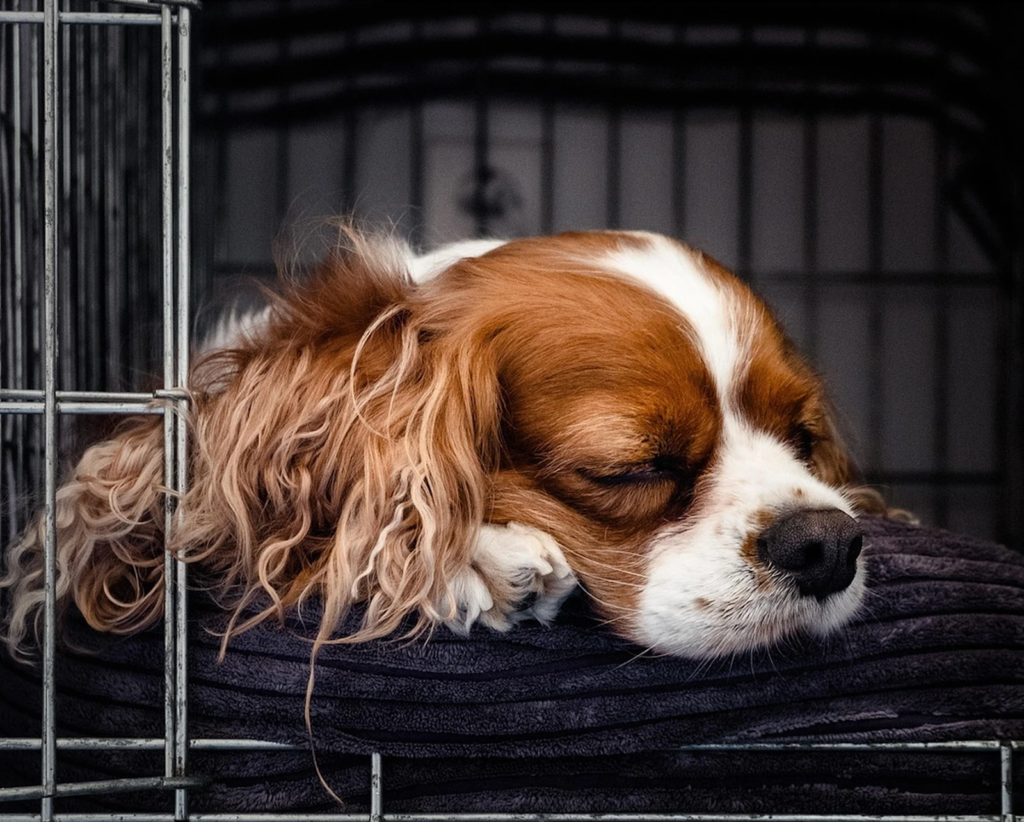
Crate Training At Night For Adult Dogs And Creating A Calm Routine
Once daytime crate training feels more comfortable, nighttime is often the next hurdle. Learning how to crate train an adult dog at night can take patience, especially if your dog is used to sleeping near you or roaming freely. Start by placing the crate near your bedroom so your dog doesn’t feel isolated, and keep bedtime routines consistent from night to night.
A calm evening makes a calmer night. Make sure your dog has had appropriate exercise, mental stimulation, and a final potty break before bedtime. Avoid overstimulating activities late in the evening, and aim for predictable wind-down cues so your dog knows it’s time to rest.
When Crate Training Isn’t Working And What To Do Instead
Crate training isn’t right for every dog. If your dog shows signs of panic, destruction, or escalating stress, it’s okay to pause and explore other options. Dog-proofed rooms, exercise pens, or supervised care can be safer alternatives that still provide structure and peace of mind. For some dogs, structured environments like DogPlay’s boarding and dog daycare in Vancouver offer safety, routine, and supervision—without the isolation or stress that unsupervised confinement can create.
At DogPlay, dogs are never left alone. Our boarding guests are supervised by trained staff on-site 24/7, with care routines, meals, and instructions provided by owners carefully followed. For day care dogs, we ensure they receive appropriate exercise, rest, and feeding based on each dog’s individual needs—so they stay comfortable and content, even when you’re not around.
Give Your Dog A Calm Routine When You’re Away With DogPlay
Crate training works best when it’s part of a balanced routine that includes play, rest, and supervision. At DogPlay, we support adult dogs through structured daycare, overnight care, and stress-free services like grooming—helping reinforce the same calm routines dogs practice at home. If you’re working on crate training, you’re welcome to bring your dog’s crate to daycare so we can help build positive, relaxed crate experiences during rest periods.For boarding stays, dogs are placed in comfortable, appropriately sized crates and monitored by trained staff to ensure they are settled and supported throughout the night. Booking a trial day care day or overnight stay can help your dog maintain routine while giving you peace of mind. Register here to get started!